Authorized: U.S. retail partner — BloodPril60 capsules · 1 a day, up to 2 · 60 days500 mg blend · 0 of 3 amounts printed60-day money-back windowLot BP-26/BL-4631
BloodPril brand markBloodprildailyU.S. retail partner — BloodPril
A white BloodPril bottle with a white screw cap and a deep-red label carrying the BLOOD PRIL wordmark, the line BLOOD PRESSURE SUPPORT and the words 60 CAPSULES, Dietary Supplement
CapsulesForm60 capsulesBottle1 capsuleServing
Lot BP-26/BL-4631 · read the label
Official product information

BloodPril: A Once-Daily Capsule for Blood Pressure Support

Written by the BloodPril editorial teamLast updated October 12, 2026How this page was checked

Quick answer

BloodPril is a capsule labeled Blood Pressure Support: one a day with 8 oz of water, up to two, and 60 capsules a bottle. Each holds a 500 mg blend of L-citrulline and two forms of L-arginine. It is not a blood pressure medicine or an ACE inhibitor. Ask your doctor first if you take blood pressure medicine or have had a heart attack.

60-day money-back window · from $0.82 a day · 60 days a bottle · ships from the US

Form CapsulesBottle 60 capsulesServing 1 capsuleSupply 60 daysBlend 500 mg
  • A full label: Supplement Facts panel, caution, storage, distributor and the FDA statement
  • Labeled Blood Pressure Support: L-citrulline and two forms of L-arginine in one 500 mg blend
  • One capsule a day with 8 oz of water, up to two; a bottle lasts 60 days at one a day
  • Not on the bottle: the additive effect with blood-pressure medicines, and the mortality signal after heart attack
Money back · satisfaction sealFDA registered facility sealDoctor formulated seal
Seller’s seals: what each one means
Accepted payment cards2, 3 or 6 bottles, from $49 a bottle · compare the packs
60 days
Which makes the six-bottle pack $0.82 a day · the price sum
Money back · satisfaction seal
Money back · satisfaction
FDA registered facility seal
FDA registered facility
GMP seal
GMP
Foreign and domestic ingredients seal
Foreign and domestic ingredients
Vegetarian seal
Vegetarian

BloodPril in sixty seconds

Quick answer

BloodPril is a 60-capsule supplement sold for blood-pressure support, taken one capsule a day with 8 oz of water, up to two. Start with the credit, because this desk does not often get to give it. This is the best label we have read. There is a real Supplement Facts panel with a serving size and a servings-per-container count. The † Daily Value Not Established footnote is correct, because no Daily Value exists for either amino acid in the blend. There is a full other-ingredients list, which tells a vegetarian buyer the capsule shell is hydroxypropyl methylcellulose rather than gelatin. There is a complete caution statement, a storage line, a safety-seal line, a named distributor with a postcode and a telephone number, a country-of-origin claim in its correctly qualified form — Made in the USA with globally sourced ingredients — and the FDA disclaimer properly asterisked to the single front-panel claim. And then the panel declares one line. Proprietary Blend 500 mg †, with three ingredients underneath and no weight against any of them. Two of those three are the same amino acid in different salts, so the formula is really two substances presented as three. The order is an order of predominance, which gives each a ceiling: at most 500 mg, 250 mg and 167 mg. And the research is in grams. Eight trials of L-citrulline at 3 to 9 g a day, pooling to a systolic reduction of 4.10 mmHg. Eleven trials of L-arginine across 387 participants at 4 to 24 g a day, pooling to 5.39 mmHg. The whole blend is 0.5 g, and 1 g at the label's maximum. Two last things. The brand name ends in −pril, the suffix that marks a class of prescription blood-pressure drugs. And the clinical summary for arginine carries two warnings that appear nowhere on this bottle: an additive effect with blood-pressure medicines, and a mortality signal after heart attack.

How you read a good label with one line missing

Four steps. The first is to give this label the credit it has earned, because the rest of this page is harder on the product than the printing deserves. The fourth is the step that decides everything.

  1. 01
    4.5 / 5label completeness, and earned

    Start by reading what is actually there

    A Supplement Facts panel with a serving size and a servings count. A correct † Daily Value Not Established footnote. A full other-ingredients list. A complete caution statement, storage, a safety-seal line, a named distributor with a town, a postcode and a telephone number, and the FDA disclaimer asterisked to the front claim.

    That is more than most packs this desk reads supply, and it is the first thing to say about this product.

  2. 02
    1 linefor three ingredients

    Then read the one line the panel declares

    The dietary half of that good panel is a single row: Proprietary Blend 500 mg, with L-Citrulline dl-Malate, L-Arginine (Alpha-Ketoglutarate dihydrate) and L-Arginine HCL beneath it and no weight against any of them.

    Two of the three are the same amino acid in different salts. So a three-ingredient blend is really two active substances.

  3. 03
    500 / 250 / 167 mgthe ceilings the order permits

    Then bound what cannot be read

    A blend is not a blank. Ingredients are listed in descending order of predominance, so the first can be at most the whole 500 mg, the second at most half, the third at most a third.

    Those are ceilings, not amounts, and every one is generous to the product. All three ingredients are salts, so part of each weight is malate, ketoglutarate or hydrochloride rather than amino acid.

  4. 04
    3–9 g · 4–24 gthe doses the trials used

    And then open the research

    Both amino acids have real pooled human evidence for blood pressure, which is more than most supplement ingredients can say. Citrulline: eight trials at 3 to 9 g a day, systolic −4.10 mmHg. Arginine: eleven trials, 387 participants, 4 to 24 g a day, systolic −5.39 mmHg.

    The whole blend is 0.5 g. At the label's maximum of two capsules it is 1 g, against a 3 g floor.

Every figure in those four steps is printed on this label or computed from the order the label prints the blend in. The trial doses are quoted from the two meta-analyses this desk opened.

Three ceilings, against the doses the trials used

Scroll. Each bar is one ingredient's ceiling drawn as a fraction of the lowest dose used in that ingredient's own pooled analysis. Every bar is generous: the real amounts are lower than the ceilings.

Three bars. Each is one blend ingredient's ceiling drawn against the lowest dose used in the trials behind it.
1at most 500 mg
2at most 250 mg
3at most 167 mg

No bar here is a printed amount, because none is printed. Each is the most that ingredient can be.

01

The order of predominance is what makes this chart possible

A proprietary blend withholds the individual weights and discloses two things: the total and the order. The order is an order of predominance, so each ingredient has a ceiling. Those ceilings are the only figures this panel permits, and they are the figures drawn here.

02

Citrulline is first, so it could be the whole 500 mg

The eight pooled trials used 3 to 9 g a day. Three grams is 3,000 mg. Even if the blend were nothing but citrulline, that is one sixth of the lowest dose any of those trials used — and it is not, because two arginines share the same 500 mg.

03

The larger arginine line is capped at half the blend

Second in the order, so at most 250 mg against a 4,000 mg floor across eleven trials and 387 participants. That is about one sixteenth. The third line, the same amino acid as a hydrochloride, is capped at 167 mg.

04

And the label's maximum does not close the gap

Two capsules is 1 g of blend against a 3 g floor, spread across three lines, two of which are one substance. It also halves the bottle from 60 days to 30 and doubles the cost per day.

500 mgthe whole blend, three ingredients, one number
500 / 250 / 167the ceilings the order gives, in mg
3–9 g · 4–24 gthe doses behind the two amino acids
4.5 and 4.0the two score rows this label genuinely earns

At a glance

Everything a buyer usually has to hunt for, in one table. On this product most of it is printed on the bottle, which is why so few rows here read not published.
BloodPril
FormCapsules, hypromellose shell — cellulose rather than gelatin
Net quantity60 capsules
Serving1 capsule with an 8 oz glass of water; up to two daily
Supply60 days at one a day — 30 at two
Supplement Facts panelPresent, with serving size and servings per container
Dietary lines on the panel1 — Proprietary Blend 500 mg
Ingredients inside it3, of which two are the same amino acid in different salts
Ingredients with a printed amount0 of 3
Ceilings from the order of predominance500 mg / 250 mg / 167 mg
Doses used in the trials3–9 g citrulline · 4–24 g arginine
Daily Value footnote† Daily Value Not Established — correct
Other ingredientsHypromellose (capsule), microcrystalline cellulose, magnesium stearate
Caution statementPresent and complete
StorageKeep away from heat, light and humidity; cool, dry place
FDA disclaimerPresent, asterisked to the front-panel claim
Country of originMade in the USA with globally sourced ingredients — the correctly qualified form
Distributor on the bottleBlood Pril, Lakeland FL, 33804, +1 (507) 448-8190
Front-panel claimsBlood Pressure Support* and Premium Formula
Price$158 / $177 / $294 for 2, 3 and 6 bottles — no single bottle is sold
Cost a day$1.32 / $0.98 / $0.82 at one capsule; double at two
Struck-through prices$358 / $537 / $1,074 — $179 multiplied by the bottle count
Guarantee60 days from purchase, with 30 days of use asked for first
Lot / CoA referenceBP-26/BL-4631 · BP-4631-26-BL (no certificate supplied)

Read the panel before you read the price

One line on this label decides everything else on this page: a 500 mg proprietary blend of three ingredients, with no weight against any of them. The order they are printed in is the only clue to proportions, and it is the clue this site works from.

Order Nowfrom $0.82 a day

The three blend lines, one at a time

Tap a name. The bar is the ceiling that ingredient's position permits, drawn against the lowest dose used in its own pooled analysis — so every bar is already generous to the product.

the printed amount against 3,000 mg a day at the very lowestat most 500 mg

What our sources record8 trials; doses 3 to 9 g a day

First in the blend, so the largest share of the 500 mg — at most all of it. The meta-analysis we opened pooled eight trials and records that “dosage of L-citrulline supplementation varied from 3 to 9 g/day”. It found a systolic reduction of 4.10 mmHg, and a diastolic result that was not statistically significant overall — reaching significance only in the subgroup taking 6 g a day or more.

Three grams is 3,000 mg. The whole blend is 500 mg. Even if the blend were nothing but citrulline, this is one sixth of the lowest dose any of those trials used. It is not. And dl-malate is a salt: part of that weight is malic acid rather than citrulline.

Positions are the order the panel prints them in, which is an order of predominance. Every amount here reads “at most”, because the panel declares one 500 mg total for all three and no individual weight. So the first can be at most the whole blend, the second at most half, the third at most a third, and every bar is drawn to that ceiling rather than to a printed figure. The real amounts are lower, and lower again once the malate, the ketoglutarate and the hydrochloride are taken out of the weight.

The ceilings, drawn against the trial doses

Six bars. Three are the ceilings the order of predominance permits, one is the label's two-capsule maximum, one is the dose at which the diastolic result became significant, and one is the entire blend against the gentler of the two reference doses.

Printed amounts to draw0 of 3

On most products this desk reads, this chart compares each printed amount with the dose its own research used. This panel prints one amount for three ingredients, so there is no individual figure to draw for any of them.

What is drawn instead is what the panel does permit. A blend discloses a total and an order of predominance, so each ingredient has a ceiling: at most 500 mg, 250 mg and 167 mg. Every bar here is a ceiling rather than an amount, and every one is generous to the product.

The shape of it is the finding. Not one ceiling reaches the lowest dose used in the trials behind that ingredient, and the two closest bars are drawn at the maximum the label permits rather than the serving it recommends.

L-Citrulline, ceiling — 500 mg against 3,000 mg a day, the lowest trial doseL-Citrulline, ceiling3,000 mg a day, the lowest trial dose500 mg — 17% of the trial doseL-Citrulline, at 2 capsules — 1000 mg against 3,000 mg a day, the lowest trial doseL-Citrulline, at 2 capsules3,000 mg a day, the lowest trial dose1000 mg — 33% of the trial doseL-Citrulline, for the diastolic effect — 1000 mg against 6,000 mg a day, where diastolic reached significanceL-Citrulline, for the diastolic effect6,000 mg a day, where diastolic reached significance1000 mg — 17% of the trial doseL-Arginine (AKG), ceiling — 250 mg against 4,000 mg a day, the lowest trial doseL-Arginine (AKG), ceiling4,000 mg a day, the lowest trial dose250 mg — 6% of the trial doseL-Arginine HCL, ceiling — 167 mg against 4,000 mg a day, the lowest trial doseL-Arginine HCL, ceiling4,000 mg a day, the lowest trial dose167 mg — 4% of the trial doseThe entire blend — 500 mg against 3,000 mg, the lower of the two floorsThe entire blend3,000 mg, the lower of the two floors500 mg — 17% of the trial dose

A ceiling that reaches the dose the trials usedA ceiling that falls short of itThe full scale, 6,000 mgone shared linear scale in milligrams — the upright mark on every row is that row’s reference dose

Six figures worth knowing about this bottle

500 mg

The whole blend

The only weight on this panel. It covers L-citrulline dl-malate, L-arginine alpha-ketoglutarate and L-arginine HCl together, and no individual figure is printed for any of them.

3,000 mg

Lowest dose in the citrulline trials

Six times the entire blend. The pooled analysis found a systolic reduction of 4.10 mmHg at doses from 3 to 9 g a day, with the diastolic result significant only at 6 g and above.

4,000 mg

Lowest dose in the arginine trials

Eight times the whole blend, and sixteen times the ceiling for the larger of the two arginine lines. Those trials covered 387 participants at 4 to 24 g a day.

60

Capsules in a bottle

At the label's single-capsule serving this matches the 60-day refund window exactly. The label also permits two a day, which halves it, and gives no reason to choose.

$0.82

Cost a day, six-bottle pack

The lowest per-day figure here, and it assumes one capsule a day for a year. At the label's maximum of two it is $1.63 and the same pack is six months.

†

Printed on the panel that is simply correct

No Daily Value exists for either amino acid, so the dagger and the footnote are both right. Small, and worth saying: most labels this desk reads get this wrong.

The label, and the one place it stops

Read at native resolution from the printed wrap supplied with this product. Almost everything a reader needs is on it, which is why the single gap matters as much as it does.

The bottle that is photographed but not sold
The bottle that is photographed but not soldA single-bottle render, supplied in the same artwork as the price list that starts at two. At one capsule a day this bottle is 60 days, which is exactly the refund window. It is the pack that would have fitted the guarantee best and it is the one you cannot buy.
Where the label stops
Where the label stopsEverything around this panel is unusually complete. The panel itself declares one blended line for three ingredients, two of which are the same amino acid in different salts. The order is an order of predominance, which is what lets this site put a ceiling on each: at most 500 mg, 250 mg and 167 mg — against trials that used 3 to 24 grams a day.

The printed wrap, annotated

Sixteen markers. Fifteen are things printed on this wrap — most of them things this desk is pleased to find — and the last one is what is not on it anywhere.

The flat printed BloodPril label wrap with numbered markers across the suggested use, storage, caution and distributor block on the left panel, the wordmark and front claims in the centre, and the Supplement Facts panel, other-ingredients list and FDA disclaimer on the right

Swipe the label sideways to reach every marker.

Tap a numbered marker on the label to read what that line says, and what it leaves out.

The panel, exactly as printed

There is a real Supplement Facts panel on this product, and this is it, transcribed line for line in the order the label prints. Serving size 1 capsule, 60 servings per container, and then a single dietary row: Proprietary Blend 500 mg. The three ingredients beneath it are indented exactly as the panel indents them, and the amount column is empty on those three rows because the panel leaves it empty. Last checked October 12, 2026.
As printed on the panelPrinted amount% Daily Value
Proprietary Blend500 mg†
L-Citrulline dl-Malatenot published†
L-Arginine (Alpha-Ketoglutarate dihydrate)not published†
L-Arginine HCLnot published†
One line for three ingredients

The blend total is printed and the three parts are not. Be exact about what that means, because the sentence is easy to soften in either direction. It does not mean the amounts are hidden entirely: a blend discloses a total and an order, and the order is an order of predominance. So the first line can be at most the whole 500 mg, the second at most 250 mg, the third at most 167 mg. Those are ceilings, not amounts, and every one of them is generous to the product. What it does mean is that nobody outside the company knows the three real figures, and that includes this desk.

Two of the three names are the same amino acid in different salts, so a three-ingredient blend is really two active substances sharing one 500 mg total. And all three are salts: dl-malate is part malic acid, alpha-ketoglutarate dihydrate is part ketoglutarate and water, and HCL is roughly 17% hydrochloric acid by weight, so the free amino acid sits below each ceiling again.

The footnote

† Daily Value Not Established — correct, because no Daily Value exists for either amino acid in this blend

This is the small thing most labels this desk reads get wrong, and this one gets right. A dagger rather than a percentage is the correct mark when no Daily Value has been set, and none has been set for either amino acid.

Other ingredients

Hydroxypropyl Methylcellulose (capsule), Microcrystalline Cellulose, Magnesium Stearate

Three, all ordinary, and the first is useful: hypromellose means the capsule shell is cellulose rather than gelatin, so a vegetarian buyer does not have to guess. That is also the one seal on this product the panel actually supports; non-GMO, gluten free and dairy free are claims about the same short list with no certifying body named anywhere.

The percentages, recomputed

There are none to recompute, and that is correct here. A printed percentage is the one number on a panel a reader can check without leaving the label. This panel prints a dagger instead, because no Daily Value exists for L-citrulline or L-arginine. Nothing on this page has been recomputed, because the panel gives a reader nothing to recheck.

One further detail is worth having beside the blend line. The pooled human trials behind both amino acids used grams. Eight trials of L-citrulline at 3 to 9 g a day; eleven trials of L-arginine across 387 participants at 4 to 24 g a day. The whole blend is 0.5 g, and 1 g at the two capsules the label permits. So on this product the amounts are bounded rather than missing, and every bound falls well short of the doses the research used.

The Daily Value line, rechecked

A printed percentage is the one number on a panel a reader can check without leaving the label. This panel prints a dagger instead, and the dagger is the right mark.

Our own arithmetic, against the FDA’s published Daily Values. Last checked October 12, 2026.
NutrientDeclared% DV printedDaily ValueOur figureVerdict
Proprietary Blend, 500 mg† Daily Value Not Establishedcorrect†No Daily Value has been established for L-citrulline or L-arginine, so a dagger is the right mark and the footnote is the right footnote. This line is correct and most labels this desk reads get it wrong.correct
The three ingredients inside itno amount printednothing to recheck—A proprietary blend discloses a total and an order, and withholds the individual weights. That is legal. It also means the three figures a reader most needs cannot be checked — only bounded.blend
Why we bother

A percentage on a panel is the one number a reader can check without leaving the label, and almost nobody does. We recompute every one we find. On this product there were none to recompute, and that is the correct result: no Daily Value has been established for L-citrulline or L-arginine, so a dagger and the footnote beneath it are exactly right.

Credit where it is due

This is a small thing and most of the labels this desk reads get it wrong, either by inventing a percentage or by leaving the column blank with no footnote to explain it. This panel does it properly, and the other-ingredients list, the caution statement and the asterisked disclaimer on the same wrap are done properly too.

And what still cannot be checked

The second row. A proprietary blend discloses a total and an order and withholds the individual weights, which is legal and which leaves a reader with no self-service check at all on the three figures that matter most. What can be done is bounding them: at most 500 mg, 250 mg and 167 mg from the order of predominance. That is not the same as knowing them, and nobody outside the company does.

Six ways to read this product

1 line
for three ingredients

The panel

This label gives a reader more than most, and then stops at the one place it matters most.

There is a Supplement Facts panel, with a serving size, a servings count, a correct Daily Value footnote and a full other-ingredients list. And the dietary portion of it is a single line: Proprietary Blend, 500 mg, with L-citrulline dl-malate, L-arginine alpha-ketoglutarate and L-arginine HCl listed underneath and no weight against any of them.

So the three numbers a buyer most needs cannot be read. They can only be bounded, using the order they are printed in.

Everything we know about the contents

Scroll or use the arrows. Six cards, and the first one gives the label the credit the other five spend.

The brand's own artwork, read closely

Published in full, as supplied. Read the second one for what it does not say: three ingredients named, and no milligram figure anywhere in either image.

How BloodPril Works, as the brand draws it
How BloodPril Works, as the brand draws itPublished as supplied. Read it for what it does not contain: no milligram figure appears anywhere in this artwork, on a product whose panel already withholds them.
The ingredient artwork
The ingredient artworkThree ingredients named, which matches the panel. Two of the three are the same amino acid — arginine, as an alpha-ketoglutarate and as a hydrochloride — so the formula is really two active substances presented as three lines.
The flat printed BloodPril label wrap, showing the caution statement on the left panel and the Supplement Facts panel and boxed FDA disclaimer on the right
The caution statement is complete and correctly worded. Neither warning below appears on this wrap, or anywhere else in the pack.

The two warnings that are not on this bottle

This is the most useful thing on this site, and it is the one thing the label does not tell you. The clinical summary we opened for arginine — the ingredient that occupies two of the three lines in this blend — carries two warnings. Neither is printed on the bottle, mentioned on the listing, or referenced anywhere in the pack supplied to this desk.

The first is an interaction with blood-pressure medicines. The professional section records that arginine “may have additive hypotensive effects” with antihypertensives. The patient-facing section says it in plainer words: “Arginine supplements can also lower blood pressure so taking both at the same time may not be safe.” This is a supplement sold for blood pressure. Many of the people it is sold to already take tablets for it.

The second is about use after a heart attack. Under Warnings: “In patients who had an acute myocardial infarction, arginine supplementation may increase risk of mortality.” The same summary records that oral supplementation after a heart attack “did not improve ejection fraction or vascular stiffness, and may be associated with higher mortality.”

Be fair to the label about what it does say. The caution statement is complete and properly worded: Pregnant or nursing mothers, children under the age of 18 and individuals with a known medical condition should consult a physician before using this or any dietary supplement. High blood pressure is a known medical condition, so that clause is doing real work here. What it does not do is name either of the two specific things above, and a reader who has already consulted a physician about their tablets will not know to go back and ask about these.

So the instruction is simple and it comes before any purchase. If you take prescription blood-pressure medicine, or any other medicine that lowers blood pressure, speak to whoever prescribes it before you buy — not after. Take the panel with you: three ingredient names and a 500 mg total is enough for that conversation. Nothing on this page is a reason to change, reduce or stop anything you have been prescribed.

One of the ten reviews supplied with this product did exactly that. Joyce F., 69, Las Vegas: “I take blood-pressure tablets. Showed the bottle to the clinic first. They said keep the tablets.” That is the most reassuring sentence in the set, and it describes a reader who was better served by her clinic than by the bottle.

Why this is in the middle of a page that sells it

Because it is the most practical thing we have to tell you, and because we earn a commission when you buy through this site. A reader who takes the panel to their prescriber before the first capsule has been better served by us than by a sale.

When to take it, and who says so

The ring is a 24-hour clock. The bottle itself gives no time of day — only one capsule with an 8 oz glass of water. The shaded band is the morning window the sales FAQ prefers, which is a different document from the label.

Morning, before a meal — the sales FAQ's stated preference02468101214161820221capsule, 8 oz water
  • Morning, before a mealThe sales FAQ's words, not the bottle's. It says morning before a meal preferred, and no reason is published for the preference.
  • With 8 oz of water, which the bottle does sayThe label's own instruction: take one (1) capsule daily with an 8 oz. glass of water. That is the whole of the timing guidance on the bottle — a volume of water and no hour.
  • Attach it to something you already doOurs, and the most useful thing in this pack. Nine of the ten supplied reviews describe a cue rather than a result — before toast, after locking the back door, before league night. On a 60-day bottle, the habit is the whole question.

Every claim on this pack, and what it rests on

The brand's How BloodPril Works artwork: three numbered steps reading Follow label directions, Product formula and Daily routine, around a photograph of the white BloodPril bottle, with four tiles labelled Supplement Facts, 60 Capsules, Bottle Label and Follow Label Directions
The brand’s own How BloodPril Works artwork, as supplied. Three numbered steps: 01 Follow label directions, 02 Product formula, 03 Daily routine. That is how to take a supplement, not how this one works: no mechanism, no ingredient, no amount and no outcome appears in it.

Where the claims actually live

One claim sits on the front of this bottle and it is correctly asterisked. Blood Pressure Support*, and the asterisk resolves to the FDA disclaimer printed on the same wrap. The word doing the work is support: lowers blood pressure would be a drug claim and it is not here. Beside it is Premium Formula, which has no definition and claims nothing. Give the front panel its due — this is claim discipline, and most packs this desk reads do not manage it.

Look at the same artwork again and notice the four tiles around the bottle. They read SUPPLEMENT FACTS, 60 CAPSULES, BOTTLE LABEL and FOLLOW LABEL DIRECTIONS, and the strip along the foot repeats three of them. Every one is a pointer back to the packaging. There is nothing wrong with any of it, and there is nothing in any of it either: an artwork headed how it works that names no ingredient, no amount and no mechanism is telling a reader to go and read the bottle, which this page would recommend anyway.

The rest of what is claimed for this product lives somewhere else: on the sales page, in the listing artwork, or on one of twelve seals, none of which names a certifying body, a number or a laboratory. Each claim is taken separately below, with whatever it rests on.

Blood Pressure Support*

A structure-function claim, properly asterisked. Support is the word keeping it legal — lowers blood pressure would be a drug claim and is not printed. What it rests on is the problem rather than the wording: both amino acids have real human trials behind them, at 3–9 g and 4–24 g a day. The blend is 0.5 g.

Premium Formula

Marketing, and worth naming as marketing. Premium has no definition, no standard and no certifying body. It makes no claim, so there is nothing for it to rest on.

Manufactured in an FDA registered facility

Accurate wording for a limited fact, and this desk will say so plainly because the wrong version of this sentence is everywhere. Registration means the facility is on a list the FDA keeps. It is not an inspection, not an endorsement and not approval. No dietary supplement is FDA approved.

Made in the USA with globally sourced ingredients

The correctly qualified form. It claims assembly in the United States and does not pretend the raw materials were grown or synthesised there. An unqualified Made in USA would be the wrong claim on this product; this is the right one.

Doctor formulated

A listing seal. No doctor is named anywhere in the pack as the formulator. A physician's name was supplied to this desk, but for a different role — as reviewer of these pages, which he has not read — and we have not printed it there either. An unnamed doctor is a word, not a credential.

GMP

Good Manufacturing Practice describes how a facility runs, not what is in this bottle and not whether this batch was tested. No certifying body and no certificate number is named.

Non-GMO · Gluten free · Dairy free · Vegetarian

Four composition claims on listing seals, none naming a certifying body. The vegetarian one is at least checkable from the panel: hypromellose means the capsule shell is cellulose rather than gelatin, which is the usual reason a capsule fails that test.

Guaranteed pure · Natural ingredients · Support guaranteed

Pure names no standard and no contaminant tested for. Natural has no regulatory definition, and is a strange word for two amino acids supplied as manufactured salts. Support guaranteed appears to promise an outcome; the only guarantee described anywhere in the pack is a refund window.

Money back · satisfaction

The one seal with a policy behind it. 60 days from purchase, with the sales side also asking for at least 30 days of use. Return shipping is the buyer's cost. Not stated: whether an opened bottle qualifies, whether a multi-pack can be partly returned, or whether a restocking fee applies.

Six quotations, from five sources

Tap a card to read the quotation and where it came from. Every source was opened by this desk and every quotation is verbatim.

The panel on its own, and the wrap it sits on

No ingredient photography was supplied with this product, and there is nothing obvious to photograph — the formula is two amino acids as manufactured salts. What was supplied is better: the printed panel and the full wrap.

The panel on its own
The panel on its ownServing size 1 capsule, 60 servings per container, and then a single dietary line: Proprietary Blend 500 mg †, with L-Citrulline dl-Malate, L-Arginine (Alpha-Ketoglutarate dihydrate) and L-Arginine HCL beneath it and no weight against any of them.

Two things on this panel are simply correct and worth saying so: the † Daily Value Not Established footnote, because none exists for either amino acid, and the other-ingredients list, which names the capsule shell as hypromellose — cellulose, not gelatin.

The printed wrap, flat
The printed wrap, flatLeft: suggested use, storage, the caution statement, the keep-out-of-reach line, the country-of-origin claim in its correctly qualified form, and a named distributor with a town, a postcode and a telephone number. Centre: the wordmark, Blood Pressure Support*, Premium Formula, 60 capsules. Right: the Supplement Facts panel, the other-ingredients list and the boxed FDA disclaimer the asterisk resolves to.

This is the most complete label this desk has read. What it does not do is print an amount for any of the three ingredients in the blend.

What is good about BloodPril, and what is not

What is good about BloodPril

  • The most complete label this desk has read. A real Supplement Facts panel with a serving size and a servings-per-container count, and almost everything a reader needs printed somewhere on the wrap.
  • The † Daily Value Not Established footnote is correct. No Daily Value exists for either amino acid, so a dagger and that footnote are exactly right. Most labels this desk reads get this wrong.
  • A full other-ingredients list, and the first entry is useful: hypromellose means the capsule shell is cellulose rather than gelatin, so a vegetarian buyer does not have to guess.
  • A complete caution statement, covering pregnancy, nursing, under-18s and known medical conditions, plus keep out of reach of children and the safety-seal line.
  • Storage instructions on the bottle — keep away from heat, light and humidity, store in a cool, dry place.
  • A named distributor with a postcode and a telephone number: Blood Pril, Lakeland FL, 33804, +1 (507) 448-8190. That is the most accountable distributor block this desk has read on any product.
  • The country-of-origin claim is the correctly qualified form — Made in the USA with globally sourced ingredients — rather than an unqualified Made in USA on a product built from imported amino acids.
  • The FDA disclaimer is present and properly asterisked to the one front-panel claim, on the same wrap. This is how it is supposed to be done.
  • One front-panel claim, using support rather than a drug verb. Lowers blood pressure would be a drug claim and is not printed anywhere.
  • Both ingredients have real pooled human evidence for blood pressure, which is more than most of this shelf can say — eight trials of citrulline and eleven of arginine.
  • All three pack prices are published up front, with per-bottle figures, and $0.82 a day on the six-bottle pack is a reasonable price for a daily habit.
  • Nine of the ten supplied reviews describe a habit rather than a result, and one of them took the bottle to her clinic and was told to keep her tablets.

What is not

  • The dietary half of that good panel is one line. A 500 mg proprietary blend of three ingredients with no individual weight against any of them — the three figures a buyer most needs are the three that are withheld.
  • Arginine appears twice. As an alpha-ketoglutarate dihydrate and as a hydrochloride, so a three-ingredient blend is really two active substances presented as three lines.
  • The research is in grams and this is in milligrams. Citrulline trials used 3 to 9 g a day and arginine trials 4 to 24 g. The whole blend is 0.5 g, and 1 g at the label's maximum.
  • All three ingredients are salts, so the free amino acid is less again than each ceiling: part malic acid, part ketoglutarate and water, and roughly 17% hydrochloric acid by weight in the third line.
  • The brand name ends in −pril, the suffix that marks the ACE inhibitors — a class of prescription blood-pressure drugs — on a dietary supplement sold for blood pressure.
  • The additive effect with blood-pressure medicines is not mentioned anywhere in the pack, although the clinical summary for arginine says taking both “may not be safe.”
  • The mortality signal after heart attack is not mentioned anywhere either.
  • No reason is given for the second capsule. One sentence permits one or two and nothing explains the choice, which decides whether a bottle is 60 days or 30.
  • No single bottle is sold, although a single-bottle render is supplied in the same artwork — and one bottle at one a day is exactly the 60-day refund window.
  • The struck-through prices are arithmetic rather than history: $358, $537 and $1,074 are $179 multiplied by the bottle count, with no date on which this product sold at $179.
  • Twelve seals, and not one names a certifying body, a number or a laboratory. Doctor formulated names no doctor, and Support guaranteed reads as a promise about an outcome when the only guarantee described anywhere is a refund window.
  • Three figures about the reviews do not reconcile. The printed score is 4.7, the supplied distribution works out to 4.30, and 91% recommend sits against 83% who gave four or five stars.

Who this is for, and who it is not for

BloodPril may suit you if

You read labels, and you want one that lets you do the work

This is the most complete label this desk has read. Serving size, servings per container, other ingredients, a correct Daily Value footnote, a full caution statement, storage, and a distributor with a town, a postcode and a telephone number. You can take it apart yourself, and most of this site is the result of doing so.

You already take L-citrulline or L-arginine and want them in one capsule

If you are already buying these and are content with a blend, this is a convenient single capsule. Go in knowing the total is 500 mg and compare it with whatever you are taking now — the trials behind both ingredients used grams.

You want a cheap daily habit alongside the things that actually move the number

Nine of the ten supplied reviews describe the capsule as the small part of a routine that already contains a walk, a clinic visit or a cuff log. At $0.82 a day on the six-bottle pack, taken that way, it is an inexpensive addition to something else.

You want to see the arithmetic before you decide

Because this product publishes a total and an order, every ingredient can be given a ceiling and every ceiling can be set beside a published trial dose. That is the whole of this site, and it is the kind of decision this label makes possible.

Skip BloodPril if

You take prescription blood-pressure medicine

Start here, and speak to whoever prescribes it before you buy. The clinical summary we opened says arginine “may have additive hypotensive effects” with antihypertensives and tells patients that “taking both at the same time may not be safe.” One of the ten supplied reviews is from somebody who showed the bottle to their clinic and was told to keep taking the tablets.

You have had a heart attack

The same summary carries a warning in terms: “In patients who had an acute myocardial infarction, arginine supplementation may increase risk of mortality.” Nothing on this bottle mentions it. If this applies to you, this is a conversation with a cardiologist, not a purchase.

You are buying it to reach a dose you read about

Then this is not a source of it. The blend is 500 mg in total against trials that used 3 to 9 grams of citrulline and 4 to 24 grams of arginine. Even at the label's maximum of two capsules you are at a third of the lower floor, spread across three ingredients.

You want to know how much of each ingredient you are taking

A proprietary blend will not tell you. You get a total and an order, which is enough for a ceiling and not enough for a figure. If that distinction matters to you — and on a product for blood pressure it reasonably might — this label stops one step short.

You are expecting your home cuff to move in the first fortnight

The brand's own summary says most people wait three to six weeks, and one of the ten supplied reviews is specifically about this: wanted the home cuff to drop in ten days. It didn't. The pooled trial effects are 4 to 5 mmHg systolic at many times this dose.

You are pregnant, nursing, or under 18

The label itself tells you to consult a physician first, and on this it is right.

Six questions before you order

Nothing is sent anywhere and nothing is stored. The answers stay in your browser.

0 of 6 answered

Are you 18 or older?
Do you take prescription medicine for blood pressure?
Have you ever had a heart attack?
Do you take any other medicine that lowers blood pressure, including nitrates?
Are you pregnant or nursing?
Are you buying this to reach a particular dose you have read about?

Safety, from named sources

No trial exists on this combination, so no side-effect profile exists for it either. What exists is a clinical summary for each of the two amino acids in it, and on a product sold for blood pressure one of those summaries matters more than anything else on this page.

Start with what the bottle does well. The caution statement is present, complete and properly worded: Do not exceed recommended dose. Pregnant or nursing mothers, children under the age of 18 and individuals with a known medical condition should consult a physician before using this or any dietary supplement. It is joined by keep out of the reach of children and do not use if safety seal is damaged or missing. That last clause about a known medical condition is doing a great deal of work here, because high blood pressure is one, and it is the thing this product is sold for.

Then the interaction, which is not on the bottle. The clinical summary we opened for arginine records that it “may have additive hypotensive effects” with antihypertensives, and tells patients directly: “Arginine supplements can also lower blood pressure so taking both at the same time may not be safe.” If you take prescription tablets, speak to whoever prescribes them before you buy. Nothing on this page is a reason to change, reduce or stop a prescribed medicine.

Then the warning about heart attack, which is not on the bottle either. Under Warnings, the same summary states: “In patients who had an acute myocardial infarction, arginine supplementation may increase risk of mortality.” It also records that oral supplementation after a heart attack “did not improve ejection fraction or vascular stiffness, and may be associated with higher mortality.” If that applies to you, this is a conversation with a cardiologist rather than a purchase.

And one finding about long-term use, because the six-bottle pack is about a year of it. The same summary notes that while “some studies support the use of arginine in coronary artery and peripheral artery diseases”, “long-term supplementation worsened PAD.” We print it rather than bury it.

On citrulline the summary is quieter and the arithmetic is the point. The pooled analysis found a systolic reduction of 4.10 mmHg at 3 to 9 g a day, with the diastolic result not statistically significant overall. The ceiling here is 500 mg, so this product is nowhere near the amount at which either effect was observed — which cuts both ways, and is not a safety argument for taking it.

What to do with all of that

Photograph the panel and take it to whoever manages your prescriptions, along with the two sentences above about additive effects and about use after a heart attack. This label makes that conversation easy — three ingredient names, a 500 mg total and a named distributor with a telephone number. What it does not do is tell you to have it.

Each blend line, against the research behind it

There is no printed-amount column, because no individual amount is printed. What is here instead is the ceiling the order of predominance permits, set beside the doses that ingredient's own pooled analysis used.
Blend lineCeiling from the orderThe doses its trials usedVerdict
L-Citrulline dl-Malateat most 500 mgEight trials; dosage varied from 3 to 9 g/day; systolic −4.10 mmHg; diastolic not significant except at 6 g and aboveOne sixth of the lowest trial dose, at best
L-Arginine (Alpha-Ketoglutarate dihydrate)at most 250 mgEleven trials, 387 participants, 4 to 24 g/d; systolic −5.39 mmHg, diastolic −2.66 mmHgAbout one sixteenth of the lowest dose
L-Arginine HCLat most 167 mgThe same eleven trials, 4 to 24 g/d — and this is the second arginine on the same panelAbout one twenty-fourth, and less after the HCl
The entire blend500 mg, or 1 g at two capsulesAgainst the gentler of the two floors, 3,000 mg a dayOne sixth, and one third at the label's maximum

How to take it, as the label describes

  1. If you take blood-pressure medicine, ask first

    Ours, and it comes before the label's own instruction for a reason. The clinical summary we opened says arginine “may have additive hypotensive effects” with antihypertensives and that taking both “may not be safe.” Speak to whoever prescribes your tablets before you buy, and keep taking them unless they tell you otherwise.

  2. One capsule, with 8 oz of water

    The label, verbatim: As a dietary supplement, take one (1) capsule daily with an 8 oz. glass of water. The glass of water is the only part of the instruction that is not a choice, and it is on the bottle.

  3. Up to two, if you decide to — and nothing tells you how to decide

    The same sentence continues: May take up to two (2) capsules daily. No reason for the second capsule is published anywhere. It halves the bottle from 60 days to 30 and doubles the cost per day, and 1 g of blend is still a third of the citrulline floor.

  4. Morning before a meal, if you follow the sales FAQ

    The bottle names no time of day. The sales FAQ adds morning before a meal preferred, and gives no reason for it. If mornings do not suit you, the habit matters more than the hour.

  5. Attach it to something you already do

    Ours. A bottle is 60 days at one a day, so whether this becomes a habit is the whole question. Nine of the ten supplied reviews describe a cue rather than a result — before toast, when the bus app opens, after watering the plants.

  6. Give it weeks, not days

    The brand's own review summary says most people wait three to six weeks. One of the ten supplied reviews is specifically about expecting faster: wanted the home cuff to drop in ten days. It didn't. The pooled trial effects are 4 to 5 mmHg systolic, at six to twenty-four times this dose.

Work out your own supply

One capsule a day is the label's serving and 60 capsules is the bottle, so a bottle is 60 days — exactly the refund window. Pick a pack and see where it lands against that window.

Pack size — one bottle is drawn because the arithmetic is worth seeing, but no single bottle is sold; the smallest pack is two

Capsules a day — the label says one and permits up to two, so both are here

1bottles in the pack
60capsules in the pack
60days, one capsule a day
Yesfinishes inside the 60-day window

The three packs, priced per day

All three prices were published in the pack supplied to this desk. There is no single-bottle price, although a single bottle is photographed. The per-day figures assume one capsule a day; at the two the label permits, double them.

Two bottles
120 days
the smallest sold
The smallest pack sold
BloodPril, 2 white bottles with a deep-red label, 60 capsules each
$1.32 a day$79 a bottle
$158 · shipping not publishedStruck figure: $179 a bottle multiplied by the count, not an observed past price.

Two bottles is a hundred and twenty days at one a day, which is twice the window you have to decide in.

  • Two bottles, 120 capsules
  • 120 days at one a day — 60 at two
  • The smallest pack sold; no single bottle is offered
  • Twice the 60-day refund window in supply
Order two bottles

60-day money-back window · no subscription

Accepted payment cards
Three bottles
180 days
what most reviewers bought
The pack they call best seller
BloodPril, 3 white bottles with a deep-red label, 60 capsules each
$0.98 a day$59 a bottle
$177 · shipping not publishedStruck figure: $179 a bottle multiplied by the count, not an observed past price.

A hundred and eighty days, about six months, and the pack six of the ten supplied reviews bought.

  • Three bottles, 180 capsules
  • Six months at one a day — three at two
  • Six of the ten supplied reviews bought this pack
  • Three times the refund window in supply
Order three bottles

60-day money-back window · no subscription

Accepted payment cards
Six bottles
360 days
lowest per day
The lowest cost a day
BloodPril, 6 white bottles with a deep-red label, 60 capsules each
$0.82 a day$49 a bottle
$294 · shipping not publishedStruck figure: $179 a bottle multiplied by the count, not an observed past price.

Three hundred and sixty days — a year at one a day — bought under a window that closes after sixty.

  • Six bottles, 360 capsules
  • $0.82 a day at one capsule — $1.63 at two
  • About a year of daily use at the lower serving
  • Six times the refund window in supply
Order six bottles

60-day money-back window · no subscription

Accepted payment cards

The struck-through figures are $358, $537 and $1,074 — which is $179 multiplied by two, three and six. A crossed-out price is a claim about what something used to sell for, and no date is given on which this product sold at $179 a bottle. We print the struck figures because they are on the offer, and this note beside them because they are arithmetic rather than history. · The money-back window runs from purchase, not from delivery · What that actually means

The price sum, done properly

All three prices are published up front, which is worth saying first: $158 for two bottles at $79 each, $177 for three at $59 each, $294 for six at $49 each. Many products in this category publish nothing and defer to the checkout.

The bottle life is unusually tidy. Sixty capsules at the label's one-a-day serving is 60 days, and the refund window is 60 days from purchase. Those line up precisely. At one capsule a day the packs work out at $1.32, $0.98 and $0.82 a day, and $0.82 is a reasonable price for a daily habit.

Then the same sentence on the label cuts the other way. May take up to two (2) capsules daily. At two, every bottle is 30 days and every per-day figure doubles: $2.63, $1.97 and $1.63. Nothing anywhere explains when to take the second capsule, so the price of this product is a range the buyer sets.

And the smallest pack is two bottles. One bottle would have matched the refund window exactly, and one bottle is not sold — though a single-bottle render is supplied in the same artwork as the price list. The minimum purchase is 120 days of product against a 60-day window, and the six-bottle pack is about a year.

The struck-through figures are $358, $537 and $1,074. That is $179 multiplied by two, three and six. A crossed-out price is a claim about what something used to sell for, and no date is given on which this product sold at $179 a bottle. We print the struck figures because they are on the offer, and this sentence beside them because they are arithmetic rather than history.

The number to check at the checkout

Shipping. Cost, speed and whether it ships outside the United States are not published anywhere in the pack supplied to us, for any of the three packs. Read the total on the payment screen before you pay.

Where to buy, and what each route means

01

This site

bloodprildaily.com is a U.S. retail partner for BloodPril, and we earn a commission on orders placed through it. That disclosure is in the footer of every page, and it is why the dose arithmetic is in the first screen of this one rather than the last.

02

The official sales page

The brief names mybloodpril.online as the sales page for this product. The buy buttons on this site go to the checkout we were given.

03

The order desk

+1 (302) 200-3480, with [email protected] by email, handles tracking, changes and refunds on placed orders. This is not the number on the bottle. The bottle prints +1 (507) 448-8190 for the distributor in Lakeland, Florida.

04

A marketplace listing

Nothing supplied to this desk names Amazon or any other marketplace as an authorised channel. We have not found one and we accuse nobody of anything — we are telling you what the pack does and does not authorise.

05

Why the route matters

A marketplace sets its own return window, which is not the 60 days described here. If the guarantee is part of why you are buying, buy where the guarantee is.

06

What to ask before you click anything

The individual amounts of the three blend ingredients, the certificate of analysis for lot BP-26/BL-4631, whether an opened bottle qualifies for the refund, and what Support guaranteed guarantees. Ask by email so you have the answers in writing.

Every badge in the pack, assessed

Money back · satisfaction seal

Money back · satisfaction

The only mark here with a policy behind it. 60 days from purchase, with the sales side also asking for at least 30 days of use before a claim. Return shipping is the buyer's cost and tracking is advised; refunds are quoted at 3–5 business days to credit then 5–10 to reach the card. Not stated: whether an opened bottle qualifies, or whether a six-pack can be partly returned.

FDA registered facility seal

FDA registered facility

This one is worded correctly on the bottle, which this desk does not often get to write: manufactured in an FDA registered facility. Registration means the facility appears on a list the FDA keeps. It is not an inspection, an endorsement or approval, and no dietary supplement is FDA approved.

Doctor formulated seal

Doctor formulated

No doctor is named anywhere in the pack as the formulator of this product. A physician's name was supplied with the pack for a different purpose — to be printed as the medical reviewer of these pages, which he has not read. We have not printed it there either.

GMP seal

GMP

Good Manufacturing Practice is about how a facility operates, not about what is in this bottle and not a test of this batch. No certifying body and no certificate number is named.

Foreign and domestic ingredients seal

Foreign and domestic ingredients

An honest mark, and it matches the bottle: Made in the USA with globally sourced ingredients. It tells you the raw materials are not all American, which is the kind of thing most listings leave a reader to assume the other way.

Non-GMO seal

Non-GMO

No certifying body named. Of the four composition seals this is the hardest to check from the panel, since the amino acids are manufactured and the panel does not say by what route.

Naturally gluten free seal

Naturally gluten free

Naturally suggests the ingredients never contained gluten rather than that the finished capsule was tested. No threshold, no test and no certifying body is named. If you are coeliac, that distinction is the whole question.

Dairy free seal

Dairy free

Plausible from the panel — nothing in the three other ingredients is a dairy derivative — but no certifying body is named and no test is described.

Vegetarian seal

Vegetarian

This one the panel actually supports. The other-ingredients list names hydroxypropyl methylcellulose (capsule), which is cellulose rather than gelatin — the usual reason a capsule is not vegetarian.

Guaranteed pure seal

Guaranteed pure

Pure names no standard, no contaminant and no laboratory. The brief gives a certificate reference — BP-4631-26-BL against lot BP-26/BL-4631 — and no certificate was supplied to this desk, so we cannot say what it covers.

Natural ingredients seal

Natural ingredients

Natural has no regulatory definition, and it is a strange word for this formula in particular: the three blend ingredients are amino acids supplied as manufactured salts — a malate, an alpha-ketoglutarate dihydrate and a hydrochloride.

Support guaranteed seal

Support guaranteed

The one seal in this set this desk would ask the seller to withdraw. It reads as a promise about an outcome. The only guarantee described anywhere in the pack is a refund window, and the bottle's own disclaimer says the product is not intended to diagnose, treat, cure or prevent any disease.

The ten reviews supplied with this product

Read this before the stars

Every figure and every word below was supplied to this desk in the same pack as the label artwork. We did not collect these reviews, cannot contact the people named, and cannot confirm that any portrait is a photograph of that person. They are published in full and unedited because hiding them would be the less honest choice, and labelled on every card because presenting them as independent would be the dishonest one.

4.7out of 5, as supplied854 written · 4,098 orders
5★55%
4★28%
3★11%
2★4%
1★2%
Portrait supplied with the review from Mark N.
Mark N.47 · Cleveland, OH★★★★★

I commute on the train. Mall walk in the morning. Capsule is extra, not a replacement for the walk. I keep it on the washer. I take it when the ferry horn goes.

3 bottles · day 26 supplied by the brand

Portrait supplied with the review from Troy C.
Troy C.41 · Denver, CO★★★★★

I farm a little plot out back. Hotel week. Original bottle, not a baggie. Serving still happened. I keep it by the router. I take it before I walk the mall.

6 bottles · day 30 supplied by the brand

Portrait supplied with the review from Earl N.
Earl N.58 · Dallas, TX★★★★★

I volunteer at church on Sundays. I don't stack a second circulation bottle. One is enough to remember. I keep it on the piano. I take it before league night.

6 bottles · day 20 supplied by the brand

Portrait supplied with the review from Luis L.
Luis L.64 · Philadelphia, PA★★★★★

I bowl league night. That's my reminder. Page said nitric oxide. I don't measure that. I measure whether I took it. I keep it next to the leash. I take it when I unroll the sleeping bag.

2 bottles · day 52 supplied by the brand

Portrait supplied with the review from Linda R.
Linda R.66 · Atlanta, GA★★★★★

I keep horses. Barn first, then the bottle. Spouse handles the cuff log. I handle the capsule. I keep it in the glove box. I take it after I lock the back door.

6 bottles · day 37 supplied by the brand

Portrait supplied with the review from Neil E.
Neil E.44 · Dallas, TX★★★★★

I do yard work for neighbors. Trash day reminder. Capsule already happened. I keep it on the fridge door. Didn't stack a second brand this time.

3 bottles · day 61 supplied by the brand

Portrait supplied with the review from Donna Q.
Donna Q.57 · Miami, FL★★★★★

I pack lunches for a crew. One capsule before toast. Cuff at the clinic is still the score. I don't skip that visit. I keep it beside the stamp dish. I mark the paper calendar, not an app.

3 bottles · day 20 supplied by the brand

Portrait supplied with the review from Wayne W.
Wayne W.47 · Minneapolis, MN★★★★★

I sit at a sewing machine all day. Head felt heavy in the afternoon. Not gone. Walk plus the capsule. I keep it on the charging pad. I take it when the bus app opens.

3 bottles · day 40 supplied by the brand

Portrait supplied with the review from Diane Q.
Diane Q.53 · Tampa, FL★★★★★

I run a food truck window. Wanted the home cuff to drop in ten days. It didn't. Kept the routine. I keep it in the lunch tote. I take it before I open email.

3 bottles · day 22 supplied by the brand

Portrait supplied with the review from Joyce F.
Joyce F.69 · Las Vegas, NV★★★★★

I walk mall laps in the morning. I take blood-pressure tablets. Showed the bottle to the clinic first. They said keep the tablets. I keep it on the workbench. I take it after I water the plants.

3 bottles · day 42 supplied by the brand

What the reviewers liked

  • Nobody in this set treats it as a replacement for anything. One says the capsule is extra, not a replacement for the walk. One keeps the clinic cuff as the score and does not skip the visit. One takes prescription tablets, showed the bottle to her clinic first, and reports being told to keep taking them. On a product sold for blood pressure, that is the most reassuring thing in this set.
  • Somebody else is doing the measuring. Two of the ten mention a cuff — one at a clinic, one a log kept by a spouse. On a number you cannot feel, whether anyone is actually measuring it is the question that matters more than the capsule.
  • The habit, not the effect. Nine of the ten describe a cue rather than a result: before toast, when the bus app opens, after locking the back door, before league night. On a once-daily capsule taken for months, that is what decides whether it does anything at all.
  • Two of them explicitly declined to stack a second product. I don't stack a second circulation bottle. Didn't stack a second brand this time. That is an unusually sober instinct in this category.

What they did not

  • The printed score does not reconcile with the distribution. 55/28/11/4/2 works out to 4.30. The figure printed beside it is 4.7. The ten reviews published average 4.30 too — so it is the headline number, not the sample, that is out.
  • 91% recommend, against 83% who gave four or five stars. Both figures were supplied in the same pack. They may be answering different questions. Nothing supplied says so.
  • The named best-seller is not what the reviewers bought. The summary says six bottles. Six of the ten bought three.
  • Week one was not what some of them expected. Wanted the home cuff to drop in ten days. It didn't. The brand's own summary says most people wait three to six weeks, and the pooled trial effects are four to five mmHg at many times this dose.
  • Somebody was shown a page about nitric oxide. Luis L.: “Page said nitric oxide. I don't measure that.” Nothing on the bottle supplied to this desk mentions nitric oxide, which means a buyer read it somewhere that is not the label.
  • A two-bottle purchase, and a three-bottle pack described as best-selling, in a set of ten with no single bottle anywhere — because no single bottle is sold, even though one is photographed.

Where these came from

All ten reviews, the 4.7 score, the star distribution, the order count and the recommend percentage were supplied to this desk in the same pack as the label artwork. We did not collect them, did not solicit them and have not edited a word of them.

What we cannot verify

We cannot contact any of the ten people named, cannot confirm that any portrait is a photograph of that person, and cannot confirm that any of them bought or took the product. We publish them because labelling them is more honest than hiding them, not because we can stand behind them.

What we recomputed

The supplied distribution gives a weighted mean of 4.30, and the ten published reviews average 4.30 as well. The printed figure is 4.7. We show all three and the arithmetic.

Why there is no star rating in this page's code

This site publishes no Review and no AggregateRating structured data for these. Google's guidance is that ratings must be sourced directly from users; these were sourced from the seller. Emitting them would put a star rating into search results on the strength of figures we have just told you we cannot verify.

The six empty slots below

Reserved for reviews this desk collects itself, from buyers who ordered through this site. They are deliberately blank, and will be marked as independently collected when there are any.

The three packs, as photographed

With the supply each one actually represents at one capsule a day, which the artwork does not say. Halve every figure if you take the two the label permits.

Two bottles · 120 days
Two bottles · 120 daysThe smallest pack sold. $158 at $79 a bottle, or $1.32 a day at one capsule. A single bottle would be 60 days, exactly matching the refund window — and a single bottle is not offered, though one is photographed.
Three bottles · 180 days
Three bottles · 180 days$177 at $59 a bottle, $0.98 a day. Six of the ten supplied reviews bought this pack, although the supplied summary names the six-bottle pack as the best seller.
Six bottles · 360 days
Six bottles · 360 days$294 at $49 a bottle, $0.82 a day and the lowest per-day figure here. It is also about a year of daily use at the label's lower serving, bought against a 60-day window — and six months if you take the two capsules the label permits.
The marketing render
The marketing renderTwo bottles wrapped in a ribbon of red, with loose red blood cells around them. Published because it is in the pack, and worth naming for what it is: an illustration, not a photograph. No amount appears, and the cells are drawn.

How the guarantee works, step by step

  1. Know the two numbers before you buy

    60 days from purchase is the window. At least 30 days of use is what the sales side asks for before a claim. One bottle at one capsule a day is exactly 60 days, so a single bottle would have matched the window precisely — and the smallest pack sold is two.

  2. Keep the order email

    It carries the order ID, which is the first thing the desk will ask for, and the date the sixty days run from.

  3. Call +1 (302) 200-3480 with the order ID

    Start the claim on the phone. Do not call the number on the bottle — +1 (507) 448-8190 is the distributor in Lakeland, Florida, not the order desk. Two numbers, two jobs.

  4. Put your details in the box

    Full name, the email address on the order and the order ID, written on a sheet inside the parcel.

  5. Send it with tracking, at your own cost

    To 275 Madison Avenue, Floor 14, New York, NY 10016. Return shipping is the buyer's cost and tracking is advised — an untracked parcel that does not arrive is your loss, and on a six-bottle box that is $294.

  6. Expect two separate windows

    Three to five business days for the desk to credit it once the return is processed, then five to ten days for the money to reach the card.

  7. Three things nobody has answered

    Whether an opened bottle qualifies, whether a multi-pack can be partly returned, and whether a restocking fee applies. None is stated anywhere in the pack. Ask on the phone before you buy six.

Fourteen things this product does not tell you

  • The amount of each of the three blend ingredients. The total is 500 mg and the order is disclosed, so each has a ceiling — but no individual weight is printed, and the three figures a buyer most needs are the three that are withheld.
  • Any reason to take the second capsule. The label permits up to two a day and gives no basis for choosing. That one sentence decides whether a bottle is 60 days or 30, and whether the six-pack is a year or six months.
  • Any mention of the interaction with blood-pressure medicines. The caution statement tells people with a known medical condition to consult a physician, which is right — but on a product sold for blood pressure, the specific additive-effect warning in the clinical literature is not referenced anywhere.
  • Any mention of the warning about use after a heart attack.
  • A one-bottle price. A one-bottle render is supplied in the artwork; the smallest pack sold is two.
  • Any basis for the struck-through prices of $358, $537 and $1,074. They are $179 multiplied by the bottle count, and no date is given on which this product sold at $179 a bottle.
  • Shipping cost, shipping speed and whether it ships outside the United States. It ships from the US unless the sales page says otherwise, and tracking arrives in the order email. No prices or timescales are given.
  • The certificate of analysis. A reference is given — BP-4631-26-BL — and no certificate was supplied, so we do not know what it tests for.
  • A lot number or best-before date in the artwork. The brief says they are on the base of the bottle when the bottle shows them. No photograph of the base was supplied.
  • The name of the formulating doctor behind the Doctor formulated seal.
  • What Support guaranteed guarantees. The only guarantee described anywhere is a refund window.
  • Whether an opened bottle qualifies for the refund, whether a multi-pack can be partly returned, and whether a restocking fee applies.
  • Why the sales page lists the ingredients in a different order from the panel. The sales page names L-Arginine first; the panel lists L-Citrulline dl-Malate first. On a proprietary blend the order is the only clue to proportions, so the two orders cannot both be right.
  • Any explanation of the brand name, which ends in the suffix that marks a class of prescription blood-pressure drugs.

Thirteen places this pack disagrees with itself

ConflictWhat we did
The sales page and the panel list the ingredients in different ordersThe sales page names L-Arginine first, then L-Citrulline dl-Malate, then L-Arginine HCL. The panel lists L-Citrulline dl-Malate first. On a proprietary blend the order is an order of predominance — it is the only information a reader has about proportions — so this is not a cosmetic difference. We follow the label, because the label wins, and we print both.
The sales page named a fourth ingredient the panel folds into a thirdThe brief records that the FAQ also names L-Arginine Alpha-Ketoglutarate and says to confirm against the label. The panel settles it: AKG is the form of the second arginine, not a separate fourth ingredient. Printed as resolved, with the resolution shown.
A one-bottle render exists; no one-bottle price doesThe artwork supplied includes a single-bottle photograph. The price list starts at two bottles. We print the render and the absence together rather than quietly dropping the image.
The bottle's phone number is not the order desk'sThe label prints +1 (507) 448-8190 for the distributor in Lakeland, Florida. Tracking and refunds on placed orders go to +1 (302) 200-3480. Both are published here with what each is for, because calling the wrong one wastes a day.
The rating printed is 4.7; the distribution gives 4.3055% five, 28% four, 11% three, 4% two, 2% one works out to 4.30. The ten reviews published average 4.30 as well, which is consistent — it is the 4.7 that does not reconcile with either. We print the recomputation and show the arithmetic.
91% recommend, against 83% who gave four or five starsThe supplied distribution puts four- and five-star reviews at 83% combined. The recommend figure printed beside it is 91%. They may measure different questions; nothing supplied says so. Both are printed, with the gap named.
The best-selling pack is not the one the reviewers boughtThe supplied summary names six bottles as the top pack. Of the ten reviews in the same pack, six bought three bottles and only three bought six. Printed as the discrepancy it is.
Support guaranteed against a disclaimer that guarantees nothingA listing seal appears to promise an outcome; the bottle says the product is not intended to diagnose, treat, cure or prevent any disease, and the only guarantee described anywhere is a refund. We print the seal and what it actually covers.
A dose range with no basis for choosing within itOne capsule daily. May take up to two. We print both and say plainly that nothing supplied explains when to take the second, and we show what each choice does to the bottle life and the price per day.
Natural ingredients on a formula of manufactured saltsA malate, an alpha-ketoglutarate dihydrate and a hydrochloride. Printed with what the panel actually says.
A review describes a mechanism the label never claimsLuis L.: “Page said nitric oxide. I don't measure that.” Nothing on the bottle supplied to this desk mentions nitric oxide, which means a buyer read it somewhere. Published unedited, and flagged.
Twelve seals, zero certificatesEvery mark names a quality; none names an issuer, a number or a laboratory. Each seal is printed with what it actually establishes.
The brand name ends in a prescription drug suffixPrinted plainly, with the source. We allege no intent, and we do not leave the fact out on a product sold to people who may have an ACE inhibitor in the cupboard.

Our score: 2.3 out of 5

Label completeness
The most complete label this desk has read. A real panel, serving size, servings per container, a correct Daily Value footnote, an other-ingredients list, a full caution statement, storage, a safety-seal line, and a named distributor with a postcode and a telephone number. Marked down only for the missing lot and best-before.
4.5
Claim discipline
One front-panel claim, correctly asterisked to an FDA disclaimer printed on the same wrap, using support rather than a drug verb. The country-of-origin wording is the correctly qualified form, and the FDA-registered-facility sentence is accurate. The listing seals are weaker than the bottle.
4.0
Panel completeness
The panel exists and is well built, and then declares one line. Three ingredients, one total, no individual weights. A blend discloses a ceiling rather than a figure.
2.0
Dose transparency
500 mg is printed, which is more than nothing, and the order of predominance lets a reader bound each ingredient. But the three numbers that decide whether this product can work are the three it withholds.
1.0
Dose against the research
Both amino acids have real pooled human evidence for blood pressure. The trials used 3–9 g and 4–24 g a day. The whole blend is 0.5 g, and even the label's maximum of two capsules reaches 1 g.
0.5
The name
A dietary supplement sold for blood pressure, named with the suffix that marks the ACE inhibitors. We allege no intent and we will not pretend the ending is a coincidence a reader should be left to notice on their own.
0.5
Safety disclosure
The caution statement is present and properly worded, which earns the mark. Against it: nothing anywhere mentions the additive effect with blood-pressure medicines, or the warning about use after a heart attack — on a product sold to exactly those readers.
1.5
Price transparency
All three tiers, per-bottle figures and struck prices published up front. Marked down because the struck figures are $179 multiplied by the bottle count with no date attached, and because no single bottle is sold though one is pictured.
3.5
Cost per day
$1.32, $0.98 and $0.82 a day at one capsule — reasonable. At the label's maximum of two, double all three, and the bottle halves.
3.0
Review honesty
All ten published unedited with photographs, and the ten average exactly what the distribution implies, which is a good sign. Against it: the 4.7 printed reconciles with neither, 91% recommend sits against 83% four-and-five-star, and the named best-selling pack is not the one the sample bought.
2.5
Overall2.3 / 5

2.3 out of 5 — and this is the most frustrating product this desk has reviewed, because it does so much right.<p>The label is the best we have read. A real Supplement Facts panel. A correct Daily Value Not Established footnote. A complete other-ingredients list that tells a vegetarian buyer the capsule is cellulose. A full caution statement. Storage. A named distributor in Lakeland, Florida, with a postcode and a telephone number. An FDA disclaimer correctly asterisked to the one front-panel claim, and a country-of-origin line in its properly qualified form. Those two rows score four and four and a half, and they are earned.</p><p>Then the panel declares one line. A 500 mg proprietary blend of three ingredients, two of which are the same amino acid in different salts. The order of predominance gives each a ceiling — 500, 250 and 167 mg — and those ceilings are what can be set against the research.</p><p>And the research is in grams. Eight trials of L-citrulline at 3 to 9 g a day, pooling to a systolic reduction of 4.10 mmHg. Eleven trials of L-arginine across 387 participants at 4 to 24 g a day, pooling to 5.39 mmHg. This blend is 0.5 g in total. At the label's maximum of two capsules it is 1 g, spread across three lines, against a 3 g floor.</p><p>Two things pull the score below what the label deserves. The product is named with the suffix that marks the ACE inhibitors, and it is sold for blood pressure. And nothing anywhere in the pack mentions that the clinical summary for its second ingredient warns of additive effects with blood-pressure medicines, or that it records a mortality signal after heart attack. One of the ten reviews supplied with this product is from somebody who takes prescription tablets and showed the bottle to their clinic first. That reader was better served by their clinic than by this label, and that is the sentence this score is really about.</p><p>We sell this product and earn when you buy it through this site. That is why this paragraph is at the top of the page rather than the bottom.</p>
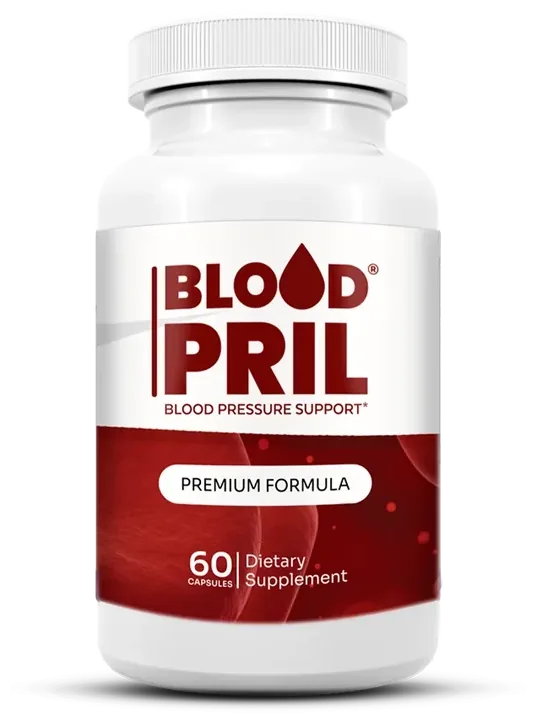
Who wrote this, and who has not reviewed it

Author and fact-checkerThe Bloodprildaily Editorial DeskLast updated October 12, 2026
Medical reviewerDr. Andres Palacio, MD, PhysicianReview date: October 12, 2026

The desk reads the label at native resolution, recomputes every figure on it, and opens every source it cites. On this product that was unusually productive, because this label gives a reader more to work with than most. It earns a commission on orders placed through this site, which is why the dose arithmetic is at the top of the page rather than the bottom.

Why the reviewer line is highlighted

These slots are vacant on purpose. A physician's name was supplied with the product pack and we were asked to print it as the medical reviewer of these pages. He has not read them — they were written after the pack arrived. On a product sold for blood pressure, to readers who may be taking prescription medicine for it, a borrowed medical endorsement is the most dangerous thing a page like this could carry.

Sources are listed in full on every page that makes a claim · Our method and who writes this · Report a correction

Sources, in full

  1. Dong J-Y, Qin L-Q, Zhang Z, et al. Effect of oral L-arginine supplementation on blood pressure: a meta-analysis of randomized, double-blind, placebo-controlled trials. American Heart Journal, 2011. “We included 11 randomized, double-blind, placebo-controlled trials involving 387 participants” at doses “ranging from 4 to 24 g/d”. Oral L-arginine “lowered systolic BP by 5.39 mm Hg (95%% CI −8.54 to −2.25, P = .001)” and “diastolic BP by 2.66 mm Hg (95%% CI −3.77 to −1.54, P &lt; .001)”. View source
  2. Effects of L-citrulline supplementation on blood pressure: a systematic review and meta-analysis. Avicenna Journal of Phytomedicine. “8 trials with 10 data sets met the inclusion criteria”; “dosage of L-citrulline supplementation varied from 3 to 9 g/day” and “duration of the intervention ranged between 1 and 17 weeks”. Systolic pressure fell by 4.10 mm Hg (95%% CI −7.94 to −0.26, p=0.037); the diastolic result was −2.08 mm Hg (95%% CI −4.32 to 0.16, p=0.069), not statistically significant, reaching significance only in the subgroup taking 6 g/day or more (−2.75 mm Hg, p=0.04). View source
  3. Memorial Sloan Kettering Cancer Center, Integrative Medicine. Arginine. Warnings: “In patients who had an acute myocardial infarction, arginine supplementation may increase risk of mortality.” On interactions with antihypertensives it records that arginine “may have additive hypotensive effects”, and for patients: “Arginine supplements can also lower blood pressure so taking both at the same time may not be safe.” It also notes that while “some studies support the use of arginine in coronary artery and peripheral artery diseases”, “long-term supplementation worsened PAD.” View source
  4. Goyal A, Cusick AS, Thielemier B. ACE Inhibitors. StatPearls, NCBI Bookshelf. “These medications most commonly end with the suffix ‘-pril.’ Examples include lisinopril, ramipril, and captopril.” Cited on this site for one reason only: this product is a dietary supplement sold for blood pressure and its brand name ends in that suffix. View source
  5. U.S. Food and Drug Administration. Dietary Supplements. The FDA does not approve dietary supplements for safety or effectiveness before they are marketed. This is why no supplement is FDA approved, and why a product manufactured in a registered facility is not thereby an approved product. View source

Every source above was opened and read. Studies that found nothing are included on purpose.

Questions people ask about BloodPril

What is BloodPril?

A dietary supplement in capsule form, sold for blood-pressure support. One bottle holds 60 capsules and the label's suggested use is one capsule daily with an 8 oz glass of water, up to two daily, so a bottle is 60 days or 30. The Supplement Facts panel declares a single line: a 500 mg proprietary blend of L-citrulline dl-malate, L-arginine alpha-ketoglutarate and L-arginine HCl, with no individual amount printed for any of the three.

Is BloodPril a blood-pressure medicine?

No. It is a dietary supplement, and its own label says so: the front-panel claim carries an asterisk resolving to not intended to diagnose, treat, cure, or prevent any disease. It is not an ACE inhibitor and contains nothing like one, despite a brand name ending in the suffix that marks that drug class.

Why is it called BloodPril?

We do not know, and we will not guess at an intention. What we can tell you is what the ending means in medicine. The clinical reference we opened states it plainly: ACE inhibitors “most commonly end with the suffix ‘-pril.’ Examples include lisinopril, ramipril, and captopril.” Those are prescription drugs for high blood pressure.<p>This is a dietary supplement sold for blood pressure. It is not one of them. We print the fact because the readers most likely to recognise that ending are the readers this product is aimed at.</p>

What is a proprietary blend, and what does it hide?

A blend gives you a total and an order and withholds the individual weights. Here the total is 500 mg and the order is L-citrulline dl-malate, L-arginine alpha-ketoglutarate, L-arginine HCl.<p>It is not nothing. Ingredients are listed in descending order of predominance, so each has a ceiling: at most 500 mg, 250 mg and 167 mg. It is also not a figure — nobody outside the company can tell you how much citrulline is in a capsule.</p>

How do you get 500, 250 and 167 mg?

From the ordering rule. The first ingredient cannot be more than the whole blend, so its ceiling is 500 mg. The second cannot exceed the first, so it can be at most half the blend: 250 mg. The third at most a third: 167 mg.<p>Every one of those is generous to the product — the real figures are lower, and all three are salts, so part of each weight is malate, ketoglutarate or hydrochloride rather than the amino acid.</p>

How many milligrams of each ingredient are there?

Not published. Only the 500 mg blend total is printed. Each ingredient can be bounded from the order — at most 500, 250 and 167 mg — and no further. On a product for blood pressure these are the three numbers a reader most needs, and they are the three the label withholds.

Does BloodPril work?

No trial exists on this combination. What can be checked is each ingredient against the dose its own research used, and the answer is the same for all three: the research is in grams and this is in milligrams. Citrulline trials ran at 3–9 g a day, arginine trials at 4–24 g. The whole blend is 0.5 g, and 1 g if you take the two capsules the label permits.

I take blood-pressure tablets. Can I take this too?

Ask whoever prescribes them before you buy, not after. The clinical summary we opened says arginine “may have additive hypotensive effects” with antihypertensives, and tells patients directly: “Arginine supplements can also lower blood pressure so taking both at the same time may not be safe.”<p>Nothing on this bottle mentions that. One of the ten reviews supplied with this product is from somebody who takes prescription tablets, showed the bottle to her clinic first, and reports being told to keep taking them.</p>

I have had a heart attack. Is that relevant?

Yes, and specifically. The same clinical summary carries this under Warnings: “In patients who had an acute myocardial infarction, arginine supplementation may increase risk of mortality.” It also records that oral supplementation after a heart attack “did not improve ejection fraction or vascular stiffness, and may be associated with higher mortality.”<p>Nothing anywhere in this product's pack mentions it. If this applies to you, this is a conversation with a cardiologist rather than a purchase.</p>

One capsule or two?

Nothing supplied to this desk tells you how to choose, which is the oddest gap on an otherwise careful label. The choice is not trivial: at one a day a bottle is 60 days and the six-pack is about a year; at two it is 30 days and six months, and the cost per day doubles.<p>What can be said is that even two capsules is 1 g of blend against a 3 g floor in the citrulline trials, so doubling does not bring this into the studied range.</p>

How much does BloodPril cost?

$158 for two bottles ($79 each), $177 for three ($59 each) and $294 for six ($49 each), against struck figures of $358, $537 and $1,074. No single bottle is sold. Confirm at the live checkout.

What does it cost a day?

At one capsule a day: $1.32, $0.98 and $0.82 for the two-, three- and six-bottle packs. At the two capsules the label permits, double each: $2.63, $1.97 and $1.63.

What is the guarantee?

A 60-day window from purchase, with the sales side also asking for at least 30 days of use before a claim. Claim by calling +1 (302) 200-3480 with the order ID. Return shipping is the buyer's cost; use tracking. Refunds are quoted at 3–5 business days to credit, then 5–10 days to appear on the card. Returns go to 275 Madison Avenue, Floor 14, New York, NY 10016.

Is there anything good about it?

Yes, and a lot of it. This is the most complete label this desk has read: a real panel, a correct Daily Value footnote, a full other-ingredients list, a proper caution statement, storage, a named distributor with an address and a phone number, and the FDA disclaimer correctly asterisked to the front-panel claim. The country-of-origin wording is the properly qualified form. Two of the ten score rows are four and above because of it.

Who medically reviewed this site?

Nobody, and the slot is left visibly empty rather than filled. See above for why.

If you are going to try BloodPril, try it this way

One bottle is 60 capsules, which at one a day is 60 days — exactly the length of the refund window. No single bottle is sold, so the smallest commitment is two bottles: $158, $1.32 a day, and 120 days of a product whose three individual amounts are not printed.

The struck-through figures are $358, $537 and $1,074 — which is $179 multiplied by two, three and six. A crossed-out price is a claim about what something used to sell for, and no date is given on which this product sold at $179 a bottle. We print the struck figures because they are on the offer, and this note beside them because they are arithmetic rather than history. · window runs from purchase · no subscription · not for under 18, pregnancy or nursing

What this page was checked against

  • The printed Supplement Facts panel, read off the supplied label image at native resolution
  • 21 CFR 101.36(c), for the order of predominance the ceilings on this site are derived from
  • Every source on our references list, each one opened and read rather than cited
Medical review
ReviewerDr. Andres Palacio, MD, Physician
RoleMedical reviewer
Review dateOctober 12, 2026

Written and fact-checked by The Bloodprildaily Editorial Desk, last updated October 12, 2026. A highlighted slot means that value has not been supplied yet and nothing has been invented in its place — why the reviewer line is empty.

BloodPril · from $0.82 a dayOne capsule a day with 8 oz of water, up to two · 60 days a bottle · 60-day money-back window
Order Now