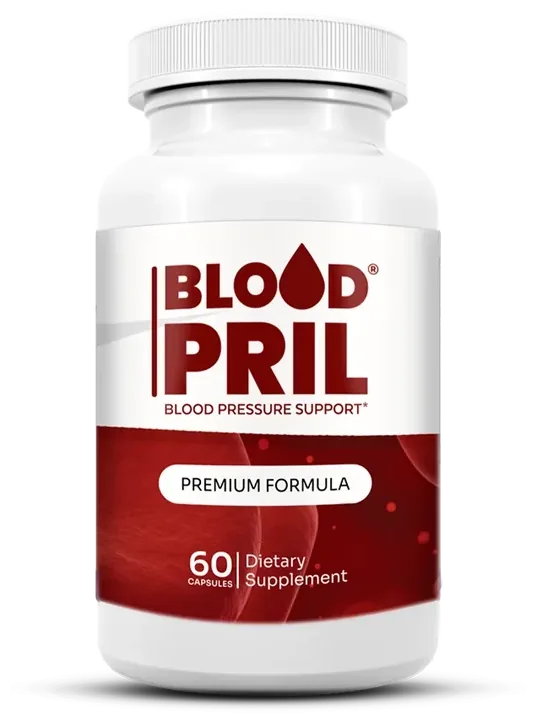
BloodPril Ingredients: A 500 mg Blend of Three
Three ingredients, one blended total, and no individual weight against any of them. What the order of predominance gives instead is a ceiling for each, and this page sets all three beside the research.
Written by the BloodPril editorial team·Last updated October 12, 2026·How this page was checked
The Supplement Facts panel declares one dietary line: a 500 mg proprietary blend of L-Citrulline dl-Malate, L-Arginine (Alpha-Ketoglutarate dihydrate) and L-Arginine HCL, with no amount printed for any of the three. Two of those three are the same amino acid in different salts, so the formula is really two active substances presented as three lines. Because blend ingredients are listed in descending order of predominance, each one has a ceiling: the first can be at most the whole 500 mg, the second at most half of it at 250 mg, the third at most a third at 167 mg. Those ceilings are generous to the product, and all three ingredients are salts, so the free amino acid is less again. The research behind them is in grams. Eight trials of L-citrulline used 3 to 9 g a day and pooled to a systolic reduction of 4.10 mmHg, with the diastolic result not statistically significant overall. Eleven trials of L-arginine across 387 participants used 4 to 24 g a day and pooled to 5.39 mmHg systolic and 2.66 mmHg diastolic. The whole blend is 0.5 g, and 1 g at the label's maximum of two capsules.
How you read a blend that prints one number
Four steps, before any ingredient. The first two are about what this panel does disclose, which is more than a reader usually assumes, and the last two are what that disclosure makes possible.
- 01500 mgthe only weight on the panel
Start with what is disclosed
The dietary half of this panel is one line: Proprietary Blend 500 mg †, with three ingredients underneath and no weight against any of them. Be exact about what that means. It does not mean the amounts are small. It means nobody outside the company knows what they are, and that includes us.
What it is not is a blank. A blend discloses a total and an order, and both are useful.
- 02descendingorder of predominance
Then read the order as information
Ingredients inside a blend are listed in descending order of predominance: the first weighs the most, the last weighs the least. That single rule is what makes this product reviewable at all.
On this panel the order is L-Citrulline dl-Malate, then L-Arginine (Alpha-Ketoglutarate dihydrate), then L-Arginine HCL. The sales page lists them in a different order, and we follow the label.
- 03500 / 250 / 167 mgthe three ceilings
Then turn the order into ceilings
A ceiling is the most an ingredient can be, given its position. The first can be at most the whole blend, 500 mg. The second cannot exceed the first, so it can be at most half, 250 mg. The third at most a third, 167 mg.
Every one of those is generous to the product, and deliberately so: the real figures are lower, because three ingredients share one 500 mg total.
- 043–9 g · 4–24 gthe doses the trials used
And then open the research
Both amino acids here have real pooled human evidence for blood pressure, which is more than most supplement ingredients can claim. Citrulline: eight trials at 3 to 9 g a day. Arginine: eleven trials, 387 participants, 4 to 24 g a day. The pooled effects are modest — 4 to 5 mmHg systolic.
The whole blend is 0.5 g. Every comparison on this page is a ceiling against a floor, which is the kindest arithmetic available.
Every ingredient name on this page is transcribed from the printed panel. Every ceiling is computed from the order that panel prints them in. Every trial dose is quoted from one of the two meta-analyses this desk opened.
The three, one at a time
Tap a name. The bar is that ingredient's ceiling drawn against the lowest dose used in its own pooled analysis — so every bar on this panel is already more generous than the formula deserves.
What our sources record8 trials; doses 3 to 9 g a day
First in the blend, so the largest share of the 500 mg — at most all of it. The meta-analysis we opened pooled eight trials and records that “dosage of L-citrulline supplementation varied from 3 to 9 g/day”. It found a systolic reduction of 4.10 mmHg, and a diastolic result that was not statistically significant overall — reaching significance only in the subgroup taking 6 g a day or more.
Three grams is 3,000 mg. The whole blend is 500 mg. Even if the blend were nothing but citrulline, this is one sixth of the lowest dose any of those trials used. It is not. And dl-malate is a salt: part of that weight is malic acid rather than citrulline.
What our sources record11 trials, 387 participants; doses 4 to 24 g a day
Second in the blend, so at most half of the 500 mg. The meta-analysis we opened included “11 randomized, double-blind, placebo-controlled trials involving 387 participants” at doses “ranging from 4 to 24 g/d”, and found oral L-arginine “lowered systolic BP by 5.39 mm Hg” and “diastolic BP by 2.66 mm Hg”.
Four grams is 4,000 mg. The ceiling here is 250 mg — about one sixteenth of the lowest dose in that analysis. And alpha-ketoglutarate dihydrate is a complex: only part of that weight is arginine at all.
What our sources recordthe same 11 trials, 4 to 24 g a day
Third and last in the blend, so at most a third of the 500 mg — and in practice less, because the first two come before it. Against the same 4 g floor that is about one twenty-fourth.
It is worth saying what this line is: the second arginine on the same panel. Arginine appears twice, as two different salts, which makes the ingredient list look longer than the formula is. Hydrochloride is also roughly 17% hydrochloric acid by weight, so the arginine itself is less again.
Positions are the order the panel prints them in, which is an order of predominance. Every amount here reads “at most”, because the panel declares one 500 mg total for all three and no individual weight. So the first can be at most the whole blend, the second at most half, the third at most a third, and every bar is drawn to that ceiling rather than to a printed figure. The real amounts are lower, and lower again once the malate, the ketoglutarate and the hydrochloride are taken out of the weight.
The panel, exactly as printed
A straight transcription from the printed wrap. One total, three names in their printed order, and the same two words in the amount column three times over.
| As printed on the panel | Printed amount | % Daily Value |
|---|---|---|
| Proprietary Blend | 500 mg | † |
| L-Citrulline dl-Malate | not published | † |
| L-Arginine (Alpha-Ketoglutarate dihydrate) | not published | † |
| L-Arginine HCL | not published | † |
The blend total is printed and the three parts are not. Be exact about what that means, because the sentence is easy to soften in either direction. It does not mean the amounts are hidden entirely: a blend discloses a total and an order, and the order is an order of predominance. So the first line can be at most the whole 500 mg, the second at most 250 mg, the third at most 167 mg. Those are ceilings, not amounts, and every one of them is generous to the product. What it does mean is that nobody outside the company knows the three real figures, and that includes this desk.
Two of the three names are the same amino acid in different salts, so a three-ingredient blend is really two active substances sharing one 500 mg total. And all three are salts: dl-malate is part malic acid, alpha-ketoglutarate dihydrate is part ketoglutarate and water, and HCL is roughly 17% hydrochloric acid by weight, so the free amino acid sits below each ceiling again.
The footnote† Daily Value Not Established — correct, because no Daily Value exists for either amino acid in this blend
This is the small thing most labels this desk reads get wrong, and this one gets right. A dagger rather than a percentage is the correct mark when no Daily Value has been set, and none has been set for either amino acid.
Other ingredientsHydroxypropyl Methylcellulose (capsule), Microcrystalline Cellulose, Magnesium Stearate
Three, all ordinary, and the first is useful: hypromellose means the capsule shell is cellulose rather than gelatin, so a vegetarian buyer does not have to guess. That is also the one seal on this product the panel actually supports; non-GMO, gluten free and dairy free are claims about the same short list with no certifying body named anywhere.
The percentages, recomputedThere are none to recompute, and that is correct here. A printed percentage is the one number on a panel a reader can check without leaving the label. This panel prints a dagger instead, because no Daily Value exists for L-citrulline or L-arginine. Nothing on this page has been recomputed, because the panel gives a reader nothing to recheck.
One further detail is worth having beside the blend line. The pooled human trials behind both amino acids used grams. Eight trials of L-citrulline at 3 to 9 g a day; eleven trials of L-arginine across 387 participants at 4 to 24 g a day. The whole blend is 0.5 g, and 1 g at the two capsules the label permits. So on this product the amounts are bounded rather than missing, and every bound falls well short of the doses the research used.
The three ceilings, drawn against the trial doses
This is the chart this site exists to draw. Each bar is a ceiling permitted by the order of predominance, set against the lowest dose used in the pooled analysis behind that ingredient — plus the label's two-capsule maximum, the 6 g mark where citrulline's diastolic result reached significance, and the entire blend against the gentler of the two floors.
On most products this desk reads, this chart compares each printed amount with the dose its own research used. This panel prints one amount for three ingredients, so there is no individual figure to draw for any of them.
What is drawn instead is what the panel does permit. A blend discloses a total and an order of predominance, so each ingredient has a ceiling: at most 500 mg, 250 mg and 167 mg. Every bar here is a ceiling rather than an amount, and every one is generous to the product.
The shape of it is the finding. Not one ceiling reaches the lowest dose used in the trials behind that ingredient, and the two closest bars are drawn at the maximum the label permits rather than the serving it recommends.
A ceiling that reaches the dose the trials usedA ceiling that falls short of itThe full scale, 6,000 mgone shared linear scale in milligrams — the upright mark on every row is that row’s reference dose
L-Citrulline dl-Malate — at most 500 mg
It is named first on the panel, so it is the largest share of the blend, and its ceiling is the whole 500 mg. It is also the ingredient with the cleaner evidence of the two, so it is the right place to start.
What it is. L-citrulline is an amino acid, supplied here as a malate salt — dl-malate, meaning the racemic form of malic acid. The salt matters for arithmetic rather than for argument: part of that 500 mg ceiling is malic acid rather than citrulline, so the citrulline itself is less than the ceiling again. No ratio is printed, so we cannot say by how much.
What the research found. The meta-analysis we opened is explicit about its own scope: “8 trials with 10 data sets met the inclusion criteria”, the “dosage of L-citrulline supplementation varied from 3 to 9 g/day”, and the “duration of the intervention ranged between 1 and 17 weeks”. Pooled across those trials, systolic pressure fell by 4.10 mmHg.
And the part most pages leave out. The diastolic result was −2.08 mmHg and not statistically significant. It reached significance only in the subgroup taking 6 g a day or more, at −2.75 mmHg. So even within the trials, the lower doses did not move the second number.
Now the comparison. Three grams is 3,000 mg. The ceiling here is 500 mg, which is one sixth of the lowest dose any of those eight trials used — and that is assuming the blend were nothing but citrulline, which it is not, because two arginine lines share the same 500 mg. At the label's maximum of two capsules the whole blend reaches 1 g, which is a third of that floor. For the dose at which the diastolic effect appeared, 6,000 mg, two capsules is one sixth.
What that does not establish. It does not establish that 500 mg of blend does nothing. No trial has tested 500 mg of this blend, and the honest statement is that the amount here sits well below the range in which any of the published effects were observed.
Because nothing in a blend can outweigh the ingredient printed above it. First position means the ceiling is the whole 500 mg, and it is the only ceiling on this panel that could, in principle, be the entire blend.
L-Arginine (Alpha-Ketoglutarate dihydrate) — at most 250 mg
Second on the panel, so its ceiling is half the blend: it cannot weigh more than the citrulline above it, and if it did the order would be wrong.
What it is. Arginine, supplied as an alpha-ketoglutarate dihydrate complex. As with the malate, the salt is part of the weight: some of that 250 mg ceiling is ketoglutarate and water of crystallisation rather than arginine. No ratio is printed, so the arginine content of this line cannot be computed from the label.
What the research found. This is the larger evidence base of the two. The meta-analysis we opened states that “we included 11 randomized, double-blind, placebo-controlled trials involving 387 participants”, at doses “ranging from 4 to 24 g/d”. Oral L-arginine “lowered systolic BP by 5.39 mm Hg (95% CI −8.54 to −2.25, P = .001)” and “diastolic BP by 2.66 mm Hg (95% CI −3.77 to −1.54, P < .001)”. Both results are statistically significant, and both are modest in size.
Now the comparison. Four grams is 4,000 mg. The ceiling here is 250 mg — about one sixteenth of the lowest dose in that analysis, and one ninety-sixth of the highest. Even taking the label's maximum of two capsules, this line's ceiling is 500 mg against a 4,000 mg floor.
And this is the ingredient the safety section is about. The clinical summary we opened for arginine records that it “may have additive hypotensive effects” with blood-pressure medicines, and tells patients that “arginine supplements can also lower blood pressure so taking both at the same time may not be safe.” The same page carries a warning about use after a heart attack. Neither appears anywhere on this bottle. If you take prescription tablets, speak to whoever prescribes them before you buy.
L-Arginine HCL — at most 167 mg, and the same amino acid again
Third and last on the panel, so its ceiling is a third of the blend: 167 mg. In practice it is less, because the two ingredients printed above it take their share first.
What it is, and this is the finding of this section. L-Arginine HCL is the same amino acid as the line above it, supplied as a hydrochloride salt instead of an alpha-ketoglutarate. Arginine therefore appears twice on a three-ingredient panel, which means this blend contains two active substances rather than three: citrulline and arginine.
Why that matters twice over. It matters for how the formula reads at a glance, because a list of three sounds fuller than a list of two. And it matters arithmetically, because splitting one substance across two lines pushes each line further down the order of predominance — the arginine is in the second and third positions rather than concentrated in one.
Then the salt. Arginine hydrochloride is roughly 17% hydrochloric acid by weight, so the free arginine in this line is less than the 167 mg ceiling again. Against the same 4,000 mg floor from those eleven trials, 167 mg is about one twenty-fourth, before that subtraction.
The research is the research above. There is no separate literature for arginine hydrochloride at blood-pressure doses in the sources this desk opened; it is arginine, and the eleven-trial analysis is the evidence for it. So this line is measured against the same figures as the line before it, from a ceiling a third the size.
What the two arginine lines add up to. At their ceilings, 250 mg plus 167 mg is 417 mg — but those two ceilings cannot both be reached, because the citrulline above them has to be the largest share of the same 500 mg. That is the limit of what a proprietary blend permits anyone outside the company to say.
Three salts, three ceilings, and the three other ingredients
All three blend ingredients are salts, and that subtracts from every ceiling on this page. dl-Malate is part malic acid. Alpha-ketoglutarate dihydrate is part ketoglutarate and part water. HCl is roughly 17% hydrochloric acid by weight. So the free amino acid in each line is less than the ceiling we have printed for it, and no ratio is published for any of the three, which means the subtraction cannot be done from the label.
Be exact about what a ceiling is. It is not an estimate and it is not a guess. It is the maximum a figure can be if the panel is printed correctly, derived from one rule: ingredients in a blend are listed in descending order of predominance. A ceiling is the most generous number this desk can honestly put beside a trial dose, which is why we use it. If the real amount were higher than the ceiling, the order on the panel would be wrong.
And the ceilings are generous in a second way. Three ingredients share one 500 mg total. If the first were the full 500 mg there would be nothing left for the other two, so in reality every figure is lower than its ceiling. We print the ceilings rather than a split because a split would be an invention, and an invention that flatters the product is worse than a blank.
The other-ingredients list, which is complete and worth reading. Hydroxypropyl Methylcellulose (capsule), Microcrystalline Cellulose, Magnesium Stearate. Three, all ordinary. The first is the useful one: hypromellose means the capsule shell is cellulose rather than gelatin, so the vegetarian claim on the listing is the one seal the panel actually supports. Microcrystalline cellulose is a bulking agent and magnesium stearate a flow agent; neither is a dietary ingredient and neither is claimed as one.
And the footnote that is simply correct. The panel marks the blend with a dagger and prints † Daily Value Not Established. That is right, because no Daily Value has been set for L-citrulline or L-arginine — there is nothing to express a percentage against. It is a small thing and most labels this desk reads get it wrong.
So that is the formula. Three printed lines, two substances, one published weight, and three ceilings of 500, 250 and 167 mg set against trials that used 3 to 24 grams a day for effects of four to five mmHg. The panel around that line is the best this desk has read. The line itself is the whole of the problem.
Because a split we cannot source is an invention, and the order of predominance gives us something better than a guess: a bound. Every figure on this page is either printed on the panel, quoted from a meta-analysis, or derived from the ordering rule with the arithmetic shown.
The panel on its own, and the wrap it sits on
No ingredient photography was supplied with this product, and on this formula there is little to photograph: two amino acids as manufactured salts in a cellulose capsule. What the pack did supply is more useful — the Supplement Facts panel on its own, and the full printed wrap it sits on. Read the panel for the three names in their printed order, which is the only clue to proportions anyone outside the company has, and read the wrap for everything around it: the suggested use, the storage line, the complete caution statement, the correctly qualified country-of-origin claim, the named distributor with a postcode and a telephone number, and the boxed FDA disclaimer the front-panel asterisk resolves to.

Two things on this panel are simply correct and worth saying so: the † Daily Value Not Established footnote, because none exists for either amino acid, and the other-ingredients list, which names the capsule shell as hypromellose — cellulose, not gelatin.

This is the most complete label this desk has read. What it does not do is print an amount for any of the three ingredients in the blend.
Fourteen things nobody published about this product
- The amount of each of the three blend ingredients. The total is 500 mg and the order is disclosed, so each has a ceiling — but no individual weight is printed, and the three figures a buyer most needs are the three that are withheld.
- Any reason to take the second capsule. The label permits up to two a day and gives no basis for choosing. That one sentence decides whether a bottle is 60 days or 30, and whether the six-pack is a year or six months.
- Any mention of the interaction with blood-pressure medicines. The caution statement tells people with a known medical condition to consult a physician, which is right — but on a product sold for blood pressure, the specific additive-effect warning in the clinical literature is not referenced anywhere.
- Any mention of the warning about use after a heart attack.
- A one-bottle price. A one-bottle render is supplied in the artwork; the smallest pack sold is two.
- Any basis for the struck-through prices of $358, $537 and $1,074. They are $179 multiplied by the bottle count, and no date is given on which this product sold at $179 a bottle.
- Shipping cost, shipping speed and whether it ships outside the United States. It ships from the US unless the sales page says otherwise, and tracking arrives in the order email. No prices or timescales are given.
- The certificate of analysis. A reference is given — BP-4631-26-BL — and no certificate was supplied, so we do not know what it tests for.
- A lot number or best-before date in the artwork. The brief says they are on the base of the bottle when the bottle shows them. No photograph of the base was supplied.
- The name of the formulating doctor behind the Doctor formulated seal.
- What Support guaranteed guarantees. The only guarantee described anywhere is a refund window.
- Whether an opened bottle qualifies for the refund, whether a multi-pack can be partly returned, and whether a restocking fee applies.
- Why the sales page lists the ingredients in a different order from the panel. The sales page names L-Arginine first; the panel lists L-Citrulline dl-Malate first. On a proprietary blend the order is the only clue to proportions, so the two orders cannot both be right.
- Any explanation of the brand name, which ends in the suffix that marks a class of prescription blood-pressure drugs.
BloodPril Ingredients: A 500 mg Blend of Three: common questions
How many milligrams of each ingredient are there?
Not published. Only the 500 mg blend total is printed. Each ingredient can be bounded from the order — at most 500, 250 and 167 mg — and no further. On a product for blood pressure these are the three numbers a reader most needs, and they are the three the label withholds.
What is in one capsule?
500 mg of blend: L-citrulline dl-malate, L-arginine alpha-ketoglutarate and L-arginine HCl in unpublished proportions, plus hydroxypropyl methylcellulose (the capsule), microcrystalline cellulose and magnesium stearate.
What is a proprietary blend, and what does it hide?
A blend gives you a total and an order and withholds the individual weights. Here the total is 500 mg and the order is L-citrulline dl-malate, L-arginine alpha-ketoglutarate, L-arginine HCl.<p>It is not nothing. Ingredients are listed in descending order of predominance, so each has a ceiling: at most 500 mg, 250 mg and 167 mg. It is also not a figure — nobody outside the company can tell you how much citrulline is in a capsule.</p>
How do you get 500, 250 and 167 mg?
From the ordering rule. The first ingredient cannot be more than the whole blend, so its ceiling is 500 mg. The second cannot exceed the first, so it can be at most half the blend: 250 mg. The third at most a third: 167 mg.<p>Every one of those is generous to the product — the real figures are lower, and all three are salts, so part of each weight is malate, ketoglutarate or hydrochloride rather than the amino acid.</p>
What is L-citrulline dl-malate?
An amino acid, supplied as a malate salt. It has real human evidence for blood pressure: the meta-analysis we opened pooled eight trials at doses that “varied from 3 to 9 g/day”, finding systolic pressure fell by 4.10 mmHg. The diastolic result was not statistically significant overall, reaching significance only at 6 g a day or more.<p>It is first in this blend, so at most 500 mg — one sixth of the lowest dose in those trials, before accounting for the malate.</p>
What is L-arginine alpha-ketoglutarate?
Arginine, supplied as an alpha-ketoglutarate dihydrate complex. Arginine has the larger evidence base of the two: “11 randomized, double-blind, placebo-controlled trials involving 387 participants” at 4 to 24 g a day, lowering systolic pressure by 5.39 mmHg and diastolic by 2.66 mmHg.<p>It is second here, so at most 250 mg — about one sixteenth of the lowest trial dose, and less again once the ketoglutarate and water are subtracted.</p>
What is L-arginine HCL, and why is arginine listed twice?
It is the same amino acid as the line above it, supplied as a hydrochloride salt instead. Arginine appears twice on a three-ingredient panel, which makes the formula look broader than it is: there are really two active substances here, citrulline and arginine.<p>Being third, its ceiling is 167 mg, and hydrochloride is roughly 17% hydrochloric acid by weight, so the arginine itself is less again.</p>
Why is there no %DV?
Because none exists. No Daily Value has been established for L-citrulline or L-arginine, so the dagger and the Daily Value Not Established footnote are exactly right. This line on the label is correct, and most labels this desk reads get it wrong.
What else is in the capsule?
Hydroxypropyl Methylcellulose (capsule), Microcrystalline Cellulose, Magnesium Stearate. All three are ordinary, and the first is useful: hypromellose means the capsule shell is cellulose rather than gelatin, so a vegetarian buyer does not have to guess.
If you are going to try BloodPril, try it this way
One bottle is 60 capsules, which at one a day is 60 days — exactly the length of the refund window. No single bottle is sold, so the smallest commitment is two bottles: $158, $1.32 a day, and 120 days of a product whose three individual amounts are not printed.
The struck-through figures are $358, $537 and $1,074 — which is $179 multiplied by two, three and six. A crossed-out price is a claim about what something used to sell for, and no date is given on which this product sold at $179 a bottle. We print the struck figures because they are on the offer, and this note beside them because they are arithmetic rather than history. · window runs from purchase · no subscription · not for under 18, pregnancy or nursing