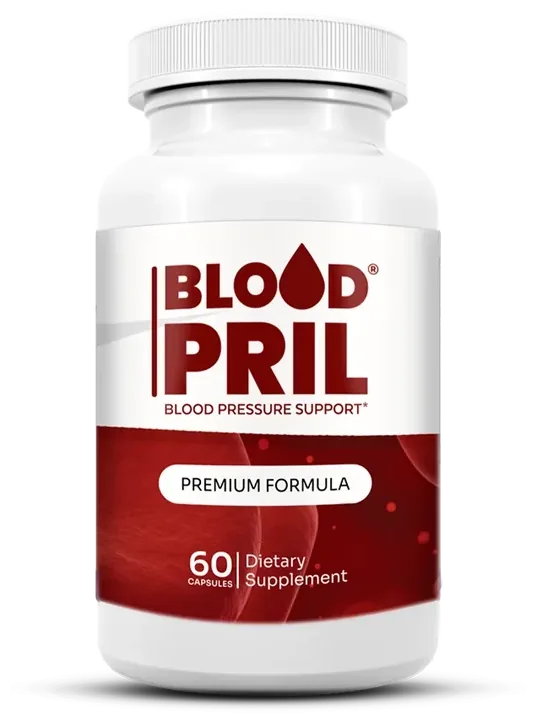
How BloodPril Works
No trial exists on this combination of three ingredients. What can be checked is each ceiling against the research behind that ingredient, and that check is this page.
Written by the BloodPril editorial team·Last updated October 12, 2026·How this page was checked
BloodPril is a dietary supplement, not a medicine, and the honest answer has two parts. No published trial exists on this combination, so there is no figure for how often it helps, how much it helps or how long it takes. What can be checked is each ingredient against the dose its own research used. The panel declares a 500 mg proprietary blend, and the order of predominance gives ceilings of at most 500, 250 and 167 mg. Eight pooled trials of L-citrulline used 3 to 9 g a day for a systolic fall of 4.10 mmHg, with the diastolic result not significant overall. Eleven pooled trials of L-arginine across 387 participants used 4 to 24 g a day for 5.39 mmHg systolic. So each ceiling sits between one sixth and one twenty-fourth of the lowest dose in its own analysis. One further fact belongs on this page rather than anywhere else. The brand name ends in the suffix that marks a class of prescription blood-pressure drugs: the clinical reference we opened records that ACE inhibitors most commonly end with the suffix -pril, naming lisinopril, ramipril and captopril. This product is a supplement and contains nothing of that kind. We allege no intention and we print the fact.
The brand's own explainer, in full
Two pieces of listing artwork, published as supplied. Read the second one for what it does not contain: three ingredients named, and no milligram figure anywhere in either image.


What the brand's artwork shows, and what the panel shows
The artwork supplied with this product does what most listing artwork does: it names the three ingredients and describes the product as blood-pressure support. No milligram figure appears anywhere in it, which is consistent with a panel that prints only a blended total.
That much is not unusual, and the reason is regulatory caution rather than deceit. A supplement that explains a mechanism too precisely starts to describe a drug, and the bottle stays carefully on the right side of that line: one front-panel claim, Blood Pressure Support*, with the asterisk resolving to the FDA disclaimer printed on the same wrap. The word support is what keeps it legal — lowers blood pressure would be a drug claim and is nowhere on this pack.
So the mechanism is not asserted by the brand, and this site will not assert one either. One of the ten supplied reviews is a useful warning about that. Luis L. writes: “Page said nitric oxide. I don't measure that.” Nothing on the bottle supplied to this desk mentions nitric oxide, which means a buyer read it somewhere that was not the label. We publish his review unedited and we do not repeat the claim.
What the panel does give is checkable, and that is the rest of this page. A total of 500 mg, three ingredients in descending order of predominance, and therefore a ceiling for each one. Set those ceilings beside the published trial doses and a reader learns the one thing a mechanism story cannot tell them: what fraction of a studied amount they are buying.
Each ceiling, against its own research
On every product this site reads, the method takes two numbers: the amount the panel permits, and the dose the published research used. On this product the first number is a ceiling rather than a figure, because a proprietary blend discloses a total and an order instead of three weights. That is enough to run the check, and it runs in the product's favour.
Citrulline, first in the blend, ceiling 500 mg. The meta-analysis we opened pooled “8 trials with 10 data sets” in which the “dosage of L-citrulline supplementation varied from 3 to 9 g/day”. Systolic pressure fell 4.10 mmHg. The diastolic result, −2.08 mmHg, was not statistically significant, reaching significance only at 6 g a day or more. Against the 3 g floor, a 500 mg ceiling is one sixth.
Arginine, second and third, ceilings 250 mg and 167 mg. The other meta-analysis included “11 randomized, double-blind, placebo-controlled trials involving 387 participants” at doses “ranging from 4 to 24 g/d”, and found oral L-arginine “lowered systolic BP by 5.39 mm Hg” and “diastolic BP by 2.66 mm Hg”. Against the 4 g floor those ceilings are about one sixteenth and one twenty-fourth.
Both ceilings are generous twice over. Three ingredients share one 500 mg total, so no ingredient reaches its ceiling in reality. And all three are salts — a malate, an alpha-ketoglutarate dihydrate and a hydrochloride that is roughly 17% hydrochloric acid by weight — so the free amino acid is less again.
What that establishes, and what it does not. It establishes that the amount of either amino acid in this capsule is far below the range in which the published effects were measured, even at the label's maximum of two capsules. It does not establish that 500 mg of this blend does nothing: no trial has tested it, and the absence of a trial is not a result. The pooled effects themselves are modest — 4 to 5 mmHg systolic — which is worth holding in mind beside any expectation of a large change.
Change, reduce or stop a prescribed medicine. If you take tablets for blood pressure, the clinical summary for arginine says taking both “may not be safe” and the conversation belongs with your prescriber. One of the ten supplied reviews describes doing exactly that, and being told to keep the tablets.
Six quotations, from five sources
Tap a card to read the quotation and where it came from. Every source was opened by this desk, and every quotation is verbatim.
The name, and what −pril marks
This is the fact this desk would want a reader to carry away from this page. The clinical reference we opened states it plainly: ACE inhibitors “most commonly end with the suffix ‘-pril.’ Examples include lisinopril, ramipril, and captopril.” Those are prescription drugs, used to treat high blood pressure.
This product is a dietary supplement called BloodPril, and it is sold for blood pressure. It is not an ACE inhibitor. It contains nothing of that kind — two amino acids supplied as salts, in a cellulose capsule — and its own label says, under the asterisk, that it is not intended to diagnose, treat, cure, or prevent any disease.
We allege no intention. We do not know why the product is named this way, nothing in the pack explains it, and we will not guess at a motive we cannot evidence. What we will not do is leave the fact out. The readers most likely to recognise that ending are the readers this product is aimed at: people managing their blood pressure, some of whom have a box in the cupboard whose name ends the same way.
Why it belongs on this page rather than in a footnote. A page titled how it works is where a reader goes to find out what a product is. On this one the answer is a supplement whose blend is six to twenty-four times short of the doses in its own research, wearing a name that borrows the suffix of the drug class that treats the condition. Those two facts belong in the same paragraph.
And the disclosure, because it belongs here rather than in a footer. This site is a U.S. retail partner for BloodPril and earns a commission on orders placed through it. That is why the ceilings, the trial doses and the name are in the first screens of every page here rather than the last.
How BloodPril Works: common questions
Does BloodPril work?
No trial exists on this combination. What can be checked is each ingredient against the dose its own research used, and the answer is the same for all three: the research is in grams and this is in milligrams. Citrulline trials ran at 3–9 g a day, arginine trials at 4–24 g. The whole blend is 0.5 g, and 1 g if you take the two capsules the label permits.
Why is it called BloodPril?
We do not know, and we will not guess at an intention. What we can tell you is what the ending means in medicine. The clinical reference we opened states it plainly: ACE inhibitors “most commonly end with the suffix ‘-pril.’ Examples include lisinopril, ramipril, and captopril.” Those are prescription drugs for high blood pressure.<p>This is a dietary supplement sold for blood pressure. It is not one of them. We print the fact because the readers most likely to recognise that ending are the readers this product is aimed at.</p>
Is BloodPril a blood-pressure medicine?
No. It is a dietary supplement, and its own label says so: the front-panel claim carries an asterisk resolving to not intended to diagnose, treat, cure, or prevent any disease. It is not an ACE inhibitor and contains nothing like one, despite a brand name ending in the suffix that marks that drug class.
How quickly does it work?
The brand's own summary says most people wait three to six weeks. One of the ten supplied reviews is specifically about expecting faster: wanted the home cuff to drop in ten days. It didn't. The pooled trial effects are 4 to 5 mmHg systolic, at six to twenty-four times this dose.
How do you get 500, 250 and 167 mg?
From the ordering rule. The first ingredient cannot be more than the whole blend, so its ceiling is 500 mg. The second cannot exceed the first, so it can be at most half the blend: 250 mg. The third at most a third: 167 mg.<p>Every one of those is generous to the product — the real figures are lower, and all three are salts, so part of each weight is malate, ketoglutarate or hydrochloride rather than the amino acid.</p>
Does it interact with any medicines?
From the source we opened, yes — and the relevant one is the class this product is sold alongside. Arginine “may have additive hypotensive effects” with blood-pressure medicines. Because no individual amount is published, nobody can say whether the quantity here is enough to matter, which is itself the reason to ask rather than assume.
If you are going to try BloodPril, try it this way
One bottle is 60 capsules, which at one a day is 60 days — exactly the length of the refund window. No single bottle is sold, so the smallest commitment is two bottles: $158, $1.32 a day, and 120 days of a product whose three individual amounts are not printed.
The struck-through figures are $358, $537 and $1,074 — which is $179 multiplied by two, three and six. A crossed-out price is a claim about what something used to sell for, and no date is given on which this product sold at $179 a bottle. We print the struck figures because they are on the offer, and this note beside them because they are arithmetic rather than history. · window runs from purchase · no subscription · not for under 18, pregnancy or nursing