BloodPril: Questions And Answers
Every question we have, in one place, answered from what the brand printed and from the sources we opened. The ones that do not flatter the product sit in the same list as the ones that do.
Written by the BloodPril editorial team·Last updated October 12, 2026·How this page was checked
BloodPril is a 60-capsule supplement sold for blood-pressure support, taken one capsule daily with an 8 oz glass of water, up to two. Most of the answers below follow from two facts that sit side by side. The first is that this is the best label this desk has read: a real Supplement Facts panel with a serving size and a servings count, the correct dagger footnote for Daily Value Not Established, a full other-ingredients list, a complete caution statement, storage, a safety-seal line, a named distributor in Lakeland, Florida with a postcode and a telephone number, the country-of-origin claim in its correctly qualified form, and the FDA disclaimer properly asterisked to the one front-panel claim. The second is that the dietary half of that panel is a single line: Proprietary Blend 500 mg, with three ingredients beneath it and no weight against any of them, two of the three being the same amino acid in different salts. The order of predominance gives ceilings of at most 500, 250 and 167 mg. The pooled trials behind those amino acids used 3 to 9 grams of citrulline and 4 to 24 grams of arginine a day. Prices are published in full at $158, $177 and $294, no single bottle is sold, the refund window is 60 days from purchase, and the brand name ends in the suffix that marks a class of prescription blood-pressure drugs. No clinician has reviewed these pages.
Everything, grouped
What BloodPril is
What is BloodPril?
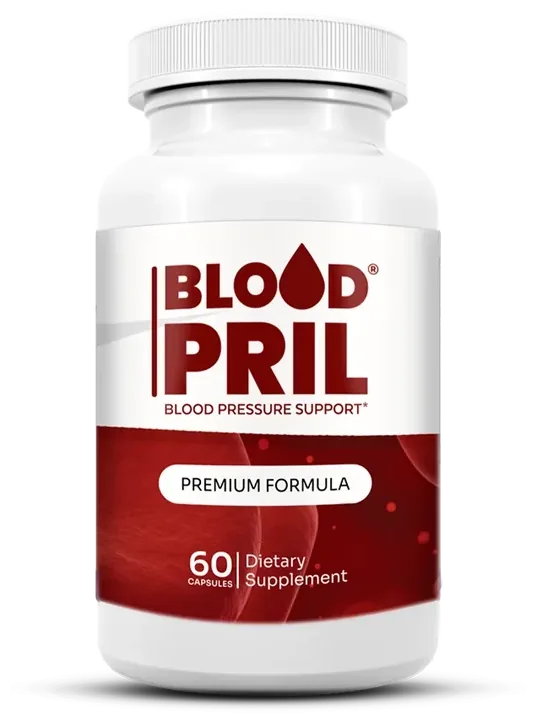
A dietary supplement in capsule form, sold for blood-pressure support. One bottle holds 60 capsules and the label's suggested use is one capsule daily with an 8 oz glass of water, up to two daily, so a bottle is 60 days or 30. The Supplement Facts panel declares a single line: a 500 mg proprietary blend of L-citrulline dl-malate, L-arginine alpha-ketoglutarate and L-arginine HCl, with no individual amount printed for any of the three.
Is BloodPril a blood-pressure medicine?
No. It is a dietary supplement, and its own label says so: the front-panel claim carries an asterisk resolving to not intended to diagnose, treat, cure, or prevent any disease. It is not an ACE inhibitor and contains nothing like one, despite a brand name ending in the suffix that marks that drug class.
Why is it called BloodPril?
We do not know, and we will not guess at an intention. What we can tell you is what the ending means in medicine. The clinical reference we opened states it plainly: ACE inhibitors “most commonly end with the suffix ‘-pril.’ Examples include lisinopril, ramipril, and captopril.” Those are prescription drugs for high blood pressure.<p>This is a dietary supplement sold for blood pressure. It is not one of them. We print the fact because the readers most likely to recognise that ending are the readers this product is aimed at.</p>
How do I take it?
The label: As a dietary supplement, take one (1) capsule daily with an 8 oz. glass of water. May take up to two (2) capsules daily. The sales FAQ adds morning before a meal preferred.
One capsule or two?
Nothing supplied to this desk tells you how to choose, which is the oddest gap on an otherwise careful label. The choice is not trivial: at one a day a bottle is 60 days and the six-pack is about a year; at two it is 30 days and six months, and the cost per day doubles.<p>What can be said is that even two capsules is 1 g of blend against a 3 g floor in the citrulline trials, so doubling does not bring this into the studied range.</p>
The panel and the blend
Is there a Supplement Facts panel?
Yes, and it is a good one. Serving size, servings per container, a correct † Daily Value Not Established footnote, a full other-ingredients list, and the FDA disclaimer boxed beneath it. This desk has reviewed products that supplied no panel at all; this is not one of them. The problem is not the panel's construction. It is that its dietary section is a single blended line.
Is there a proprietary blend?
Yes — the entire dietary portion of the panel is one. 500 mg covering all three ingredients, with no individual weights.
What is a proprietary blend, and what does it hide?
A blend gives you a total and an order and withholds the individual weights. Here the total is 500 mg and the order is L-citrulline dl-malate, L-arginine alpha-ketoglutarate, L-arginine HCl.<p>It is not nothing. Ingredients are listed in descending order of predominance, so each has a ceiling: at most 500 mg, 250 mg and 167 mg. It is also not a figure — nobody outside the company can tell you how much citrulline is in a capsule.</p>
How do you get 500, 250 and 167 mg?
From the ordering rule. The first ingredient cannot be more than the whole blend, so its ceiling is 500 mg. The second cannot exceed the first, so it can be at most half the blend: 250 mg. The third at most a third: 167 mg.<p>Every one of those is generous to the product — the real figures are lower, and all three are salts, so part of each weight is malate, ketoglutarate or hydrochloride rather than the amino acid.</p>
How many milligrams of each ingredient are there?
Not published. Only the 500 mg blend total is printed. Each ingredient can be bounded from the order — at most 500, 250 and 167 mg — and no further. On a product for blood pressure these are the three numbers a reader most needs, and they are the three the label withholds.
What is in one capsule?
500 mg of blend: L-citrulline dl-malate, L-arginine alpha-ketoglutarate and L-arginine HCl in unpublished proportions, plus hydroxypropyl methylcellulose (the capsule), microcrystalline cellulose and magnesium stearate.
Why is there no %DV?
Because none exists. No Daily Value has been established for L-citrulline or L-arginine, so the dagger and the Daily Value Not Established footnote are exactly right. This line on the label is correct, and most labels this desk reads get it wrong.
What else is in the capsule?
Hydroxypropyl Methylcellulose (capsule), Microcrystalline Cellulose, Magnesium Stearate. All three are ordinary, and the first is useful: hypromellose means the capsule shell is cellulose rather than gelatin, so a vegetarian buyer does not have to guess.
Why would a company blend the amounts?
We will not guess at a motive. What we can say is what it costs you: you cannot compare this with another product, you cannot set any ingredient against the dose its own trials used except as a ceiling, and you cannot give a clinician a straight answer about how much of anything you are taking.
The three ingredients
What is L-citrulline dl-malate?
An amino acid, supplied as a malate salt. It has real human evidence for blood pressure: the meta-analysis we opened pooled eight trials at doses that “varied from 3 to 9 g/day”, finding systolic pressure fell by 4.10 mmHg. The diastolic result was not statistically significant overall, reaching significance only at 6 g a day or more.<p>It is first in this blend, so at most 500 mg — one sixth of the lowest dose in those trials, before accounting for the malate.</p>
What is L-arginine alpha-ketoglutarate?
Arginine, supplied as an alpha-ketoglutarate dihydrate complex. Arginine has the larger evidence base of the two: “11 randomized, double-blind, placebo-controlled trials involving 387 participants” at 4 to 24 g a day, lowering systolic pressure by 5.39 mmHg and diastolic by 2.66 mmHg.<p>It is second here, so at most 250 mg — about one sixteenth of the lowest trial dose, and less again once the ketoglutarate and water are subtracted.</p>
What is L-arginine HCL, and why is arginine listed twice?
It is the same amino acid as the line above it, supplied as a hydrochloride salt instead. Arginine appears twice on a three-ingredient panel, which makes the formula look broader than it is: there are really two active substances here, citrulline and arginine.<p>Being third, its ceiling is 167 mg, and hydrochloride is roughly 17% hydrochloric acid by weight, so the arginine itself is less again.</p>
Whether it works
Does BloodPril work?
No trial exists on this combination. What can be checked is each ingredient against the dose its own research used, and the answer is the same for all three: the research is in grams and this is in milligrams. Citrulline trials ran at 3–9 g a day, arginine trials at 4–24 g. The whole blend is 0.5 g, and 1 g if you take the two capsules the label permits.
Is BloodPril a scam?
Not a question we answer yes or no. This product has the most complete label this desk has read — real panel, full caution statement, storage, other-ingredients list, a named distributor with a postcode and telephone number, and a correctly asterisked FDA disclaimer. Against that: a proprietary blend that hides all three amounts, a 500 mg total against trials run in grams, a brand name borrowing a drug-class suffix, and no mention anywhere of the interaction with blood-pressure medicines.
Is BloodPril FDA approved?
No, and no dietary supplement is. The FDA does not approve supplements for safety or effectiveness before sale. The bottle's own wording is correct — manufactured in an FDA registered facility — and that describes a factory being on a list, not this product being tested, inspected or endorsed.
How quickly does it work?
The brand's own summary says most people wait three to six weeks. One of the ten supplied reviews is specifically about expecting faster: wanted the home cuff to drop in ten days. It didn't. The pooled trial effects are 4 to 5 mmHg systolic, at six to twenty-four times this dose.
Will it lower my blood pressure?
Neither we nor the label will tell you that. The bottle says support, not lowers, and carries the disclaimer that it is not intended to treat or prevent any disease. What the research shows is a 4 to 5 mmHg systolic reduction, at doses of 3 to 24 grams a day. This blend is 0.5 grams.
Safety, and the two warnings that are not on the bottle
What are the side effects?
The bottle carries a proper caution statement: do not exceed the dose; pregnant or nursing mothers, under-18s and individuals with a known medical condition should consult a physician first. That last clause covers most people buying this.<p>The specific thing to know is not on the bottle. See the interaction question below — it is the most useful paragraph on this site.</p>
I take blood-pressure tablets. Can I take this too?
Ask whoever prescribes them before you buy, not after. The clinical summary we opened says arginine “may have additive hypotensive effects” with antihypertensives, and tells patients directly: “Arginine supplements can also lower blood pressure so taking both at the same time may not be safe.”<p>Nothing on this bottle mentions that. One of the ten reviews supplied with this product is from somebody who takes prescription tablets, showed the bottle to her clinic first, and reports being told to keep taking them.</p>
I have had a heart attack. Is that relevant?
Yes, and specifically. The same clinical summary carries this under Warnings: “In patients who had an acute myocardial infarction, arginine supplementation may increase risk of mortality.” It also records that oral supplementation after a heart attack “did not improve ejection fraction or vascular stiffness, and may be associated with higher mortality.”<p>Nothing anywhere in this product's pack mentions it. If this applies to you, this is a conversation with a cardiologist rather than a purchase.</p>
Does it interact with any medicines?
From the source we opened, yes — and the relevant one is the class this product is sold alongside. Arginine “may have additive hypotensive effects” with blood-pressure medicines. Because no individual amount is published, nobody can say whether the quantity here is enough to matter, which is itself the reason to ask rather than assume.
Is it safe?
The label handles safety better than most: a full caution statement, a storage line, a safety-seal warning, keep out of reach of children. What it does not do is name the two findings a reader of this particular product would want — the additive effect with antihypertensives, and the mortality warning after heart attack. Both are on this site because they are not on the bottle.
Should I talk to a doctor first?
The label itself says so, for anyone with a known medical condition — and high blood pressure is one, which means most buyers. Take the panel with you. Unlike many products this desk reviews, there is a real panel to take.
Can I take it if I am pregnant or nursing?
The label says to consult a physician first, and on this it is right. Nothing further is published.
Can under-18s take it?
The label says under-18s should consult a physician before using this or any dietary supplement.
I take a diabetes medicine. Is that a problem?
Nothing in the sources we opened for these two amino acids describes a blood-sugar interaction. The general advice on the bottle still applies: a known medical condition means consulting a physician first.
I am having cancer treatment. Can I take it?
Ask your oncology team first and take the panel with you. The clinical summary we opened for arginine is published by a cancer centre precisely because supplement interactions matter in that setting.
Does it contain allergens?
The other-ingredients list is published in full — hypromellose, microcrystalline cellulose, magnesium stearate — which is more than many labels give you. None is a common allergen. No allergen statement as such is printed.
Taking it
When should I take it?
The sales FAQ says morning before a meal preferred. The bottle itself gives no time of day, only the 8 oz of water. No reason for the morning preference is published.
What if I miss a day?
Nothing supplied addresses a missed serving. On a once-daily capsule the practical answer is to take it the next morning and carry on. Nine of the ten supplied reviews describe tying it to something that already happens, which is the part that makes a two-month habit survive.
How long should I take it before deciding?
The brand asks for 30 days of use before a refund claim and says most people wait three to six weeks. The window is 60 days from purchase. At one capsule a day, one bottle is exactly 60 days — so a single bottle would have matched the decision period precisely. The smallest pack sold is two.
How long does one bottle last?
60 days at one capsule a day; 30 at two. 60 capsules, one per serving.
Price and packs
How much does BloodPril cost?
$158 for two bottles ($79 each), $177 for three ($59 each) and $294 for six ($49 each), against struck figures of $358, $537 and $1,074. No single bottle is sold. Confirm at the live checkout.
What does it cost a day?
At one capsule a day: $1.32, $0.98 and $0.82 for the two-, three- and six-bottle packs. At the two capsules the label permits, double each: $2.63, $1.97 and $1.63.
Are the struck-through prices real?
They are $358, $537 and $1,074 — $179 multiplied by two, three and six. No date is given on which this product sold at $179 a bottle. We print them because they are on the offer and we print this note because a crossed-out number is a claim about the past that almost nobody can check.
Which pack should I buy?
We will not choose for you, but one piece of arithmetic is worth having: at one capsule a day, a single bottle would be exactly 60 days, matching the refund window — and a single bottle is not sold. The smallest pack is two, which is 120 days against that window. The six-pack is the cheapest per day and is about a year of daily use.
Can I buy just one bottle?
No. A single-bottle photograph is supplied in the product artwork, but no single-bottle price is offered. The smallest pack is two bottles at $79 each.
What packs are sold?
Two, three and six bottles. No single bottle, and no four- or five-bottle option.
Is the six-bottle pack worth it?
It is the cheapest per day at $0.82, and it is about a year of daily use at the label's lower serving — bought against a 60-day window, for a blend at a fraction of the studied dose. Both of those are true at once.
Is there a subscription?
Nothing supplied describes one. These are one-off purchases. Confirm at the checkout that you are not enrolling in anything.
The guarantee
What is the guarantee?
A 60-day window from purchase, with the sales side also asking for at least 30 days of use before a claim. Claim by calling +1 (302) 200-3480 with the order ID. Return shipping is the buyer's cost; use tracking. Refunds are quoted at 3–5 business days to credit, then 5–10 days to appear on the card. Returns go to 275 Madison Avenue, Floor 14, New York, NY 10016.
What does the guarantee not say?
Whether an opened bottle qualifies, whether a multi-pack can be partly returned, and whether a restocking fee applies. Ask on the phone before you buy six.
Does the guarantee cover the whole supply?
Only for a bottle you cannot buy on its own. At one capsule a day a single bottle is 60 days, which matches the window exactly — but the smallest pack is two bottles, which is 120 days. Three is 180 and six is about 360.
How do I return it?
Call +1 (302) 200-3480 first, with the order ID ready. Send your full name, email and order ID with the parcel to 275 Madison Avenue, Floor 14, New York, NY 10016. Return shipping is your cost — use a tracked service.
How long does a refund take?
Quoted as 3–5 business days after they credit it, then 5–10 days to appear on the card.
The reviews
Are the reviews on this page real?
We do not know, and we say so on every card. All ten, the score, the distribution and the order count were supplied to this desk in the same pack as the label artwork. We did not collect them and cannot contact anyone named. We publish them unedited and labelled, and emit no Review or AggregateRating structured data.
Why does your page say 4.30 when the brand says 4.7?
Because 4.30 is what the supplied distribution works out to: 55% five, 28% four, 11% three, 4% two and 2% one. The ten reviews published average 4.30 as well, which is consistent. It is the 4.7 printed beside them that reconciles with neither.
Why do you question the 91% recommend figure?
Because the same pack puts four- and five-star reviews at 83% combined. The recommend figure printed beside it is 91%. They may be answering different questions — nothing supplied says so — so we print both and name the gap.
Are there any negative reviews?
Two of the ten are three-star and they are among the most useful cards here. The supplied distribution says 4% are two-star and 2% one-star; none of those is in the ten we were given. We note it rather than presenting the sample as representative.
What do the reviews actually tell you?
Mostly how people fit it into a routine rather than whether it works. Nobody treats it as a replacement — one calls it extra, not a replacement for the walk, one keeps the clinic cuff as the score, one takes prescription tablets and was told by her clinic to keep them. Two expected faster results than they got.
Are the review photographs real people?
We cannot confirm that any portrait is a photograph of the person named. They arrived in the same pack as the product artwork. We publish them because removing them while keeping the words would be a stranger kind of dishonesty, and we label every card.
Why are six review slots blank?
They are reserved for reviews this desk collects itself, from buyers who ordered through this site. There are none yet, so they stay empty.
Why do your pages not show a star rating in Google?
Because we publish no Review or AggregateRating structured data for brand-supplied reviews. Google's guidance is that ratings must be sourced directly from users; these were sourced from the seller.
Seals and testing
What do the seals mean?
Twelve of them, and not one names a certifying body, a certificate number or a laboratory. The bottle itself is better than the listing: its FDA-registered-facility sentence and its country-of-origin line are both correctly worded. The seal this desk would ask the seller to withdraw is Support guaranteed, which reads as a promise about an outcome when the only guarantee described anywhere is a refund.
Who is the doctor in “Doctor formulated”?
Nobody is named. No doctor appears anywhere in the pack as the formulator. A physician's name was supplied for a different role — as the reviewer of these pages, which he has not read — and we have not printed it there either.
What does the GMP seal mean?
Good Manufacturing Practice describes how a facility operates, not what is in this bottle and not whether this batch was tested. No certifying body and no certificate number is named.
What does “FDA-registered facility” mean?
That the facility is on a list the FDA keeps. It is not an inspection, not an endorsement and not approval of anything made there. Worth saying that this bottle uses the correct wording, which many do not.
Is it made in the USA?
The bottle says Made in the USA with globally sourced ingredients, which is the correctly qualified form of that claim: assembled here, raw materials from elsewhere. A listing seal says the same thing in different words.
Is there a certificate of analysis?
A reference is given — BP-4631-26-BL, against lot BP-26/BL-4631 — and no certificate was supplied to this desk. Ask the order desk for it in writing.
Is it third-party tested?
Nothing supplied says so. A GMP seal is not a third-party test of a batch, and a certificate reference without a certificate is not a result.
How do I know it is not contaminated?
You do not, and neither do we. Ask for the certificate of analysis for lot BP-26/BL-4631, in writing, and ask what it covers.
Is there an expiry date?
Not in anything supplied to this desk. The brief says the lot and best-before are on the base of the bottle when the bottle shows them; no photograph of the base was supplied. Check it when the box arrives — the six-pack is about a year of product.
Buying and contact
Where should I buy it?
Through this site, which is a U.S. retail partner for this product — and we earn a commission when you do, which is why the dose arithmetic is above the buy button rather than below it.
What is the official website?
The brief names mybloodpril.online as the sales page. This site, bloodprildaily.com, is a U.S. retail partner and is not the manufacturer.
Can I buy it on Amazon?
Nothing supplied names Amazon or any marketplace as an authorised channel. If you buy elsewhere, the 60-day window described here may not apply to you.
Who makes BloodPril?
The bottle names a distributor, which is more than most products this desk reviews manage: Blood Pril, Lakeland FL, 33804, +1 (507) 448-8190. That is a company, a town, a postcode and a telephone number. The manufacturer as such is not named, and the facility behind the GMP and FDA-registered marks is not identified.
Who runs this website?
The Bloodprildaily editorial desk. We are a U.S. retail partner for this product and we earn a commission on orders placed through this site.
Which number do I call?
Two different numbers do two different jobs. For an order — tracking, a change, a refund — call the order desk on +1 (302) 200-3480. The bottle prints +1 (507) 448-8190, which is the distributor in Lakeland, Florida. For this website, email [email protected].
Can I email about an order?
Yes — [email protected] is the sales desk. Email this site at [email protected] only for things about the site itself.
How does shipping work?
It ships from the United States unless the sales page says otherwise, and tracking arrives in the order email. Cost, speed and international availability are not published.
How much is shipping?
Not published for any of the three packs, and neither is delivery speed. Read the total on the payment screen before you pay.
How do I contact somebody?
Placed orders and refunds: +1 (302) 200-3480 or [email protected]. This website: [email protected], Mon–Fri 9:00am–5:00pm ET. Returns: 275 Madison Avenue, Floor 14, New York, NY 10016.
What should I ask before I buy?
Four things. How many milligrams of citrulline and arginine are in a capsule? Should I take one capsule or two, and why? Can I see the certificate of analysis for lot BP-26/BL-4631? And does an opened bottle qualify for the refund? Ask by email so the answers are in writing.
This site
Who writes this site?
The Bloodprildaily editorial desk. We are a U.S. retail partner for this product and we earn a commission when you buy through this site. That is why the dose ladder is in the first screen of the home page rather than in a footnote.
Do you make money if I buy?
Yes. We earn a commission on every order placed through this site. It is also why the editorial score is 2.3 rather than something more comfortable.
Why is the medical reviewer line blank?
Because a supplied name is not a review. A physician's name came with the product pack with instructions to print it as the medical reviewer of these pages. He has not read them. On a product sold for blood pressure, to readers who may be taking prescription medicine for it, a borrowed medical endorsement is the most dangerous thing a page like this could carry.
Who medically reviewed this site?
Nobody, and the slot is left visibly empty rather than filled. See above for why.
If you are this critical, why sell it?
The sale is going to happen somewhere, and the choice is whether it happens on a page that does the dose arithmetic or one that does not. We would rather lose the order to an informed decision than win it from an uninformed one.
Is there anything good about it?
Yes, and a lot of it. This is the most complete label this desk has read: a real panel, a correct Daily Value footnote, a full other-ingredients list, a proper caution statement, storage, a named distributor with an address and a phone number, and the FDA disclaimer correctly asterisked to the front-panel claim. The country-of-origin wording is the properly qualified form. Two of the ten score rows are four and above because of it.
What did you recompute on this product?
Four things. The ceilings: 500, 250 and 167 mg from the order of predominance. The bottle life: 60 capsules is 60 days at one a day, 30 at two. The cost per day: $1.32, $0.98 and $0.82, doubling at two capsules. And the rating: the supplied distribution and the ten published reviews both give 4.30 against a printed 4.7.
How do I report something wrong on this site?
Email [email protected] with the page address and one sentence about what is wrong. If you are correcting a citation, say which claim and which source.