Authorized: U.S. retail partner — BloodPril60 capsules · 1 a day, up to 2 · 60 days500 mg blend · 0 of 3 amounts printed60-day money-back windowLot BP-26/BL-4631
BloodPril brand markBloodprildailyU.S. retail partner — BloodPril

BloodPril Benefits

One claim is printed on the front of this bottle, and it is built the way a claim of that kind is supposed to be built. What it rests on is the harder question.

Written by the BloodPril editorial teamLast updated October 12, 2026How this page was checked

Quick answer

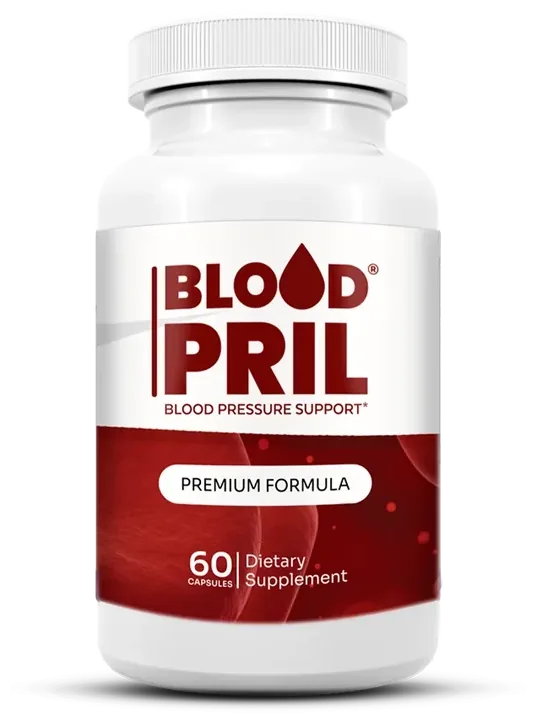
The front of the BloodPril bottle carries a single claim: Blood Pressure Support, with an asterisk. That construction is correct and this desk will say so first. Support is a structure-function word rather than a drug verb, and the asterisk resolves to the FDA disclaimer printed on the same wrap, so the claim and its qualification travel together on the same object. Most packs this desk reads get one half of that wrong. Beside it the front panel carries Premium Formula, which defines nothing and claims nothing, and the wrap carries the country-of-origin line in its correctly qualified form, Made in the USA with globally sourced ingredients. What the one real claim rests on is where the trouble starts. Both amino acids in the blend have genuine pooled human evidence for blood pressure: eight trials of L-citrulline at 3 to 9 grams a day, eleven trials of L-arginine across 387 participants at 4 to 24 grams a day, for pooled effects of four to five mmHg systolic. The whole proprietary blend is 500 mg, and 1 g at the label's maximum of two capsules. No individual weight is printed for any of the three ingredients in it.

One claim on the front, and it is constructed properly

The front of this bottle is short, and the restraint is the first thing to notice. Many packs this desk reads stack five or six promises down the label in the same type size. This one carries a single claim.

Read at native resolution, the front is: the BLOOD PRIL® wordmark, then BLOOD PRESSURE SUPPORT*, then PREMIUM FORMULA, then 60 CAPSULES and Dietary Supplement. One of those five lines is a claim. The rest are a name, a word with no definition, a count and a category.

And the claim carries its asterisk. That asterisk ties a structure-function claim to the statement it must travel with, and here it resolves to a boxed line on the same wrap: These statements have not been evaluated by the Food and Drug Administration. This product is not intended to diagnose, treat, cure, or prevent any disease. Claim and disclaimer on one object, correctly linked. This desk does not often get to write that sentence.

The verb is right as well. Support is the word keeping this claim lawful. Lowers blood pressure would be a drug claim, and it is not printed anywhere on this bottle. Neither is treats or reduces. The brand chose the permitted word and stayed inside it, which is why claim discipline is one of only two rows on our score card this product earns outright, at 4.0 out of 5.

Then read the word next to it. Premium Formula has no definition, no standard and no certifying body. It is not a false claim, because it is not a claim at all. It specifies nothing.

And the country-of-origin line is also the correct version. The wrap reads Made in the USA with globally sourced ingredients. That claims assembly in the United States and declines to pretend the raw materials were grown there. An unqualified Made in USA on two amino acids supplied as manufactured salts would have been the wrong claim, and the qualification is the part most packs drop.

Which document governs

The bottle. Always. On this product that works in the label's favour, because the bottle is the most complete document in the pack. The argument on this site is not about what the label says. It is about the one number it declines to break down.

The claim, drawn against the doses behind it

On most products this chart cannot be drawn, because no total is published. Here it can, because the panel prints a total and an order. Each bar is one ingredient's ceiling against the lowest dose in its own analysis.

Printed amounts to draw0 of 3

On most products this desk reads, this chart compares each printed amount with the dose its own research used. This panel prints one amount for three ingredients, so there is no individual figure to draw for any of them.

What is drawn instead is what the panel does permit. A blend discloses a total and an order of predominance, so each ingredient has a ceiling: at most 500 mg, 250 mg and 167 mg. Every bar here is a ceiling rather than an amount, and every one is generous to the product.

The shape of it is the finding. Not one ceiling reaches the lowest dose used in the trials behind that ingredient, and the two closest bars are drawn at the maximum the label permits rather than the serving it recommends.

L-Citrulline, ceiling — 500 mg against 3,000 mg a day, the lowest trial doseL-Citrulline, ceiling3,000 mg a day, the lowest trial dose500 mg — 17% of the trial doseL-Citrulline, at 2 capsules — 1000 mg against 3,000 mg a day, the lowest trial doseL-Citrulline, at 2 capsules3,000 mg a day, the lowest trial dose1000 mg — 33% of the trial doseL-Citrulline, for the diastolic effect — 1000 mg against 6,000 mg a day, where diastolic reached significanceL-Citrulline, for the diastolic effect6,000 mg a day, where diastolic reached significance1000 mg — 17% of the trial doseL-Arginine (AKG), ceiling — 250 mg against 4,000 mg a day, the lowest trial doseL-Arginine (AKG), ceiling4,000 mg a day, the lowest trial dose250 mg — 6% of the trial doseL-Arginine HCL, ceiling — 167 mg against 4,000 mg a day, the lowest trial doseL-Arginine HCL, ceiling4,000 mg a day, the lowest trial dose167 mg — 4% of the trial doseThe entire blend — 500 mg against 3,000 mg, the lower of the two floorsThe entire blend3,000 mg, the lower of the two floors500 mg — 17% of the trial dose

A ceiling that reaches the dose the trials usedA ceiling that falls short of itThe full scale, 6,000 mgone shared linear scale in milligrams — the upright mark on every row is that row’s reference dose

Six claims and benefits, one at a time

01

Blood Pressure Support*

The one front-panel claim, and the construction is correct. Support rather than a drug verb, and an asterisk that resolves to the FDA disclaimer on the same wrap. What it rests on is the difficulty: three ingredients share one 500 mg total and none carries a printed weight, against trials run in grams.

02

Premium Formula

Marketing, and worth naming as marketing. Premium has no definition, no standard and no certifying body behind it. It makes no claim, so there is nothing for it to rest on and nothing a reader can check.

03

Made in the USA with globally sourced ingredients

The correctly qualified form, and credit is due. It claims assembly here and does not pretend the raw materials were. The unqualified version is one of the commonest errors on this shelf and this label did not make it.

04

Two ingredients with real pooled human evidence

A genuine benefit, and rarer than it sounds. Both amino acids have published human meta-analyses for blood pressure: citrulline over eight trials, arginine over eleven trials and 387 participants. The evidence exists. The doses are the problem.

05

A panel you can actually work with

The best label this desk has read. Serving size, servings per container, the correct † Daily Value Not Established footnote, a full other-ingredients list, a caution statement, storage, a safety-seal line and a named distributor with a postcode and a telephone number.

06

$0.82 a day on six bottles

Published arithmetic rather than an estimate. Six bottles at $294 is 360 capsules, so at one a day that is 82 cents. Two bottles are $1.32 and three are $0.98. Double each at two capsules.

What nobody can honestly say about this product

It is worth writing the negatives down plainly, because an absence is harder to notice than a statement.

Nobody can tell you how much of each ingredient is in it. The panel declares one dietary line, Proprietary Blend 500 mg †, with L-Citrulline dl-Malate, L-Arginine (Alpha-Ketoglutarate dihydrate) and L-Arginine HCL beneath it and no weight against any of the three. The order of predominance gives ceilings of 500 mg, 250 mg and 167 mg, and a ceiling is not an amount.

Nobody can tell you the dose matches the research. It does not. Eight trials of L-citrulline used 3 to 9 g a day; eleven trials of L-arginine used 4 to 24 g a day. The whole blend is 0.5 g, and 1 g at the label's maximum.

Nobody can tell you how often it works. No trial has tested this blend at this amount, so there is no response rate. Any such figure has been invented.

Nobody can tell you it is fast. The brand's own summary says most buyers wait three to six weeks, and one supplied review is about expecting otherwise: wanted the home cuff to drop in ten days. It didn't.

Nobody has told you the two things most worth knowing. The clinical summary this desk opened on arginine warns that it “may have additive hypotensive effects” with blood-pressure medicines, and that “in patients who had an acute myocardial infarction, arginine supplementation may increase risk of mortality.” Neither sentence appears anywhere on this bottle. The caution statement does send anyone with a known medical condition to a physician, which is not the same as naming either warning.

And nobody can tell you the name is a coincidence or that it is not. The brand ends in −pril. The clinical reference on ACE inhibitors states that “these medications most commonly end with the suffix ‘-pril.’” No intent alleged; the fact is printed.

What is good about BloodPril, and what is not

What is good about BloodPril

  • The most complete label this desk has read. Panel, serving size, servings per container, other ingredients, caution, storage, safety seal, distributor.
  • One front-panel claim, built correctly — support rather than a drug verb, asterisked to the FDA disclaimer on the same wrap.
  • A correct † Daily Value Not Established footnote, because no Daily Value exists for either amino acid.
  • Both ingredients have real pooled human evidence — eight trials of citrulline, eleven of arginine across 387 participants.
  • Country of origin in its correctly qualified form: made in the USA with globally sourced ingredients.
  • A named distributor with a postcode and a telephone number, the line that makes every other line mean something.
  • The blend's total and order are both disclosed, which makes a ceiling computable for each ingredient.
  • All three prices published up front, down to $0.82 a day on the six-bottle pack.

What is not

  • One dietary line for three ingredients. Zero of the three carry a printed amount, so each has a ceiling rather than a figure.
  • The research is in grams and the blend is 0.5 g. Trials used 3–9 g of citrulline and 4–24 g of arginine; two capsules reach 1 g.
  • Two of the three are the same amino acid, arginine, as an alpha-ketoglutarate and as a hydrochloride. Three lines, two substances.
  • All three are salts, so part of each ceiling is malate, ketoglutarate or hydrochloride rather than amino acid. No ratio is printed.
  • The additive effect with blood-pressure medicines is not on the bottle, on a product sold to readers likely to be taking some.
  • Nor is the mortality signal after heart attack, the most specific warning in any source this desk opened.
  • The brand name ends in −pril, the suffix that marks a class of prescription blood-pressure drugs. No intent alleged; the fact is printed.
  • Premium Formula defines nothing, and of twelve seals not one names a certifying body, a number or a laboratory. Doctor formulated names no doctor; support guaranteed promises an outcome when the only guarantee anywhere is a refund window.
  • Shipping cost, speed and international availability are all not published.

BloodPril Benefits: common questions

Does BloodPril work?

No trial exists on this combination. What can be checked is each ingredient against the dose its own research used, and the answer is the same for all three: the research is in grams and this is in milligrams. Citrulline trials ran at 3–9 g a day, arginine trials at 4–24 g. The whole blend is 0.5 g, and 1 g if you take the two capsules the label permits.

How quickly does it work?

The brand's own summary says most people wait three to six weeks. One of the ten supplied reviews is specifically about expecting faster: wanted the home cuff to drop in ten days. It didn't. The pooled trial effects are 4 to 5 mmHg systolic, at six to twenty-four times this dose.

I take blood-pressure tablets. Can I take this too?

Ask whoever prescribes them before you buy, not after. The clinical summary we opened says arginine “may have additive hypotensive effects” with antihypertensives, and tells patients directly: “Arginine supplements can also lower blood pressure so taking both at the same time may not be safe.”<p>Nothing on this bottle mentions that. One of the ten reviews supplied with this product is from somebody who takes prescription tablets, showed the bottle to her clinic first, and reports being told to keep taking them.</p>

Is there anything good about it?

Yes, and a lot of it. This is the most complete label this desk has read: a real panel, a correct Daily Value footnote, a full other-ingredients list, a proper caution statement, storage, a named distributor with an address and a phone number, and the FDA disclaimer correctly asterisked to the front-panel claim. The country-of-origin wording is the properly qualified form. Two of the ten score rows are four and above because of it.

If you are going to try BloodPril, try it this way

One bottle is 60 capsules, which at one a day is 60 days — exactly the length of the refund window. No single bottle is sold, so the smallest commitment is two bottles: $158, $1.32 a day, and 120 days of a product whose three individual amounts are not printed.

The struck-through figures are $358, $537 and $1,074 — which is $179 multiplied by two, three and six. A crossed-out price is a claim about what something used to sell for, and no date is given on which this product sold at $179 a bottle. We print the struck figures because they are on the offer, and this note beside them because they are arithmetic rather than history. · window runs from purchase · no subscription · not for under 18, pregnancy or nursing

What this page was checked against

  • The printed Supplement Facts panel, read off the supplied label image at native resolution
  • 21 CFR 101.36(c), for the order of predominance the ceilings on this site are derived from
  • Every source on our references list, each one opened and read rather than cited
Medical review
ReviewerDr. Andres Palacio, MD, Physician
RoleMedical reviewer
Review dateOctober 12, 2026

Written and fact-checked by The Bloodprildaily Editorial Desk, last updated October 12, 2026. A highlighted slot means that value has not been supplied yet and nothing has been invented in its place — why the reviewer line is empty.

BloodPril · from $0.82 a dayOne capsule a day with 8 oz of water, up to two · 60 days a bottle · 60-day money-back window
Order Now