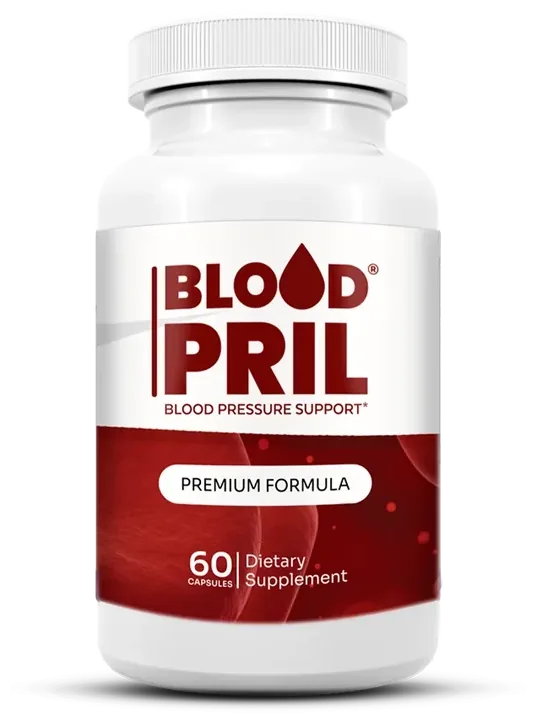
Authorized: U.S. retail partner — BloodPril60 capsules · 1 a day, up to 2 · 60 days500 mg blend · 0 of 3 amounts printed60-day money-back windowLot BP-26/BL-4631
BloodPril brand markBloodprildailyU.S. retail partner — BloodPril

Daily Values, And How To Recheck One

The percentage on a panel is the one number a reader can check without leaving the label. This panel prints a dagger instead, and the dagger is the right mark.

Written by the BloodPril editorial teamLast updated October 12, 2026How this page was checked

Quick answer

A percent Daily Value on a Supplement Facts panel is the amount in one serving expressed as a percentage of the Daily Value, a reference figure set for labelling so that every product on every shelf is measured against the same yardstick. It is not a recommended intake for any individual. Because the Daily Values are published, any printed percentage can be rechecked: divide the declared amount by the Daily Value, multiply by a hundred, compare. Ingredients with no established Daily Value carry a dagger or a double asterisk pointing at a footnote reading Daily Value not established, which is correct rather than evasive, and it is the normal case for amino acids. This panel does exactly that. Its one dietary line, Proprietary Blend 500 mg, carries a dagger, and the footnote reads Daily Value Not Established. No Daily Value has been set for L-citrulline or for L-arginine, so there is no percentage to print and a dagger is the right mark. Most labels this desk reads get this convention wrong; this one gets it right. Which leaves the distinction this page exists to teach. No Daily Value is not the same as no amount. A dagger removes a percentage. It does not remove the milligram figure to its left, and on this panel it is that figure, for each of the three ingredients, which is missing.

What a Daily Value actually is

It is a reference figure used for labelling. Not a prescription, not a target, and not a recommendation tailored to anybody.

One Daily Value is set per nutrient for the purpose of printing a panel, so that every product on every shelf expresses its amounts against the same yardstick. That comparability is the whole point of it, and it is why a printed percentage is useful even though no individual's requirement is exactly the reference figure.

The Daily Values are not secret and they are not hard to find. The National Institutes of Health publishes a fact sheet for every nutrient that has one, and each fact sheet states the figure in a single sentence with the ages it applies to. No Daily Value is quoted anywhere on this site, and the reason is the subject of the third section of this page: neither ingredient in this blend has one.

A Recommended Dietary Allowance is a different thing, and the two often differ. An allowance is an intake estimate for a population group, broken down by age and sometimes by sex. A Daily Value is a single labelling figure chosen so that one number can be printed for everybody over four years old. If you have ever noticed that a percentage on a pack does not match what a clinician told you to take, this is usually why.

How to recheck one, in ten seconds

Three steps, and you need nothing but the panel and a search engine.

One: read the amount and the percentage off the panel. Make sure you have the serving size right first. This panel gives it plainly — Serving Size: 1 capsule, Servings Per Container: 60 — and it agrees with the suggested use on the other side of the wrap. A panel written per two capsules and an instruction to take one describe different doses, and that is the commonest way a reader doubles or halves everything else they conclude.

Two: look up the Daily Value. Search for the nutrient plus Office of Dietary Supplements. The sentence you want is usually in the first screen of the fact sheet, and it names the figure and the age range it covers. If no fact sheet names a Daily Value, that is your answer: there is not one, and the panel should be printing a dagger.

Three: divide. Amount divided by Daily Value, multiplied by a hundred. Compare the result with the printed percentage, remembering that panels round to the nearest whole percent and that anything under one per cent is printed as <1%.

That is the whole method, and it is the only part of a supplement label a buyer can independently verify from an armchair. On this product it correctly returns nothing, because the only dietary line carries a dagger rather than a percentage. So the recheck this desk ran instead was the one the panel does permit: 500 ÷ 1, 500 ÷ 2 and 500 ÷ 3, from the order of predominance, giving ceilings of at most 500, 250 and 167 mg.

What a correct percentage tells you

Not that the bottle contains what the panel says — nothing printed on a label can tell you that. It tells you the panel was produced carefully, and care in the part you can check is weak evidence about care in the parts you cannot. On this product the equivalent signal is the dagger itself: getting a footnote right is a small sign that somebody proofread the panel.

What “Daily Value not established” means

It means exactly what it says: no reference figure has been set for that ingredient, so there is no percentage to print. You will see it marked with a dagger or a double asterisk pointing at a footnote at the bottom of the panel.

It is not evasive and it is not a warning. It appears against almost every botanical, every amino acid and most non-vitamin compounds in this aisle, which makes it the normal case rather than the exception. A reader who treats every dagger as a red flag will end up suspicious of the entire shelf and no better informed. A panel that invented a percentage for an ingredient with no Daily Value would be doing something far worse.

Now the worked example, and it is a credit. The one dietary line on this panel reads Proprietary Blend 500 mg and carries † in the percent Daily Value column. The footnote at the foot of the panel reads † Daily Value Not Established. That is correct. No Daily Value has been set for L-citrulline or for L-arginine, the two amino acids in the blend, so a dagger is the right mark and that footnote is the right footnote. Most labels this desk reads get this convention wrong. Some print a percentage that cannot exist; some leave the column blank with no footnote at all; some put an asterisk against a claim and a dagger against a nutrient and resolve neither. This one does it properly.

Which brings up the distinction this whole page exists to teach, and it is the distinction that decides this product. No Daily Value is not the same as no amount. An ingredient with a dagger beside it still has a milligram figure printed to its left, and that figure is the thing a reader can actually use: it can be set beside a studied dose, multiplied out across a bottle, or read against a monograph. The dagger removes a percentage. It does not remove the number. On this panel the dagger is right and the number is where the trouble is: the blend total is printed and the three individual weights are not, so there are three figures here that no convention and no footnote has anything to do with.

The fault a recheck usually finds is a unit

In practice, printed percentages are usually right. The error a recheck most often turns up is not arithmetic but units, and it is worth knowing what one looks like, because it is invisible unless you divide.

A microgram (mcg) is one thousandth of a milligram (mg). On a panel the two are set in the same type at the same size, three characters apart, and almost nothing about the layout draws attention to which is which.

So the tell is a percentage that cannot be reconciled with its own amount. If a line declares a figure in micrograms and claims a full Daily Value that is itself stated in milligrams, one of the two is wrong by a factor of a thousand — and from the panel alone a reader cannot tell which. What to do about it: look at the other lines, and publish the discrepancy as a discrepancy with a view attached rather than as a finding.

On this panel there is one unit to check and it checks out. The blend is declared as 500 mg, in milligrams, on a capsule product, and the three ceilings that follow from it are in milligrams too. Nothing on this panel is out by a factor of a thousand. The difficulty here is the opposite of a unit error, and it is worth being exact about the difference: an error can be spotted, argued about and corrected, while a withheld figure cannot be checked at all.

There is one place on this product where a thousand-fold difference genuinely matters, and it is not a mistake. The research behind both amino acids is written in grams. The citrulline trials used 3 to 9 g a day and the arginine trials 4 to 24 g a day. The whole blend is 500 mg, which is 0.5 g. Reading those two figures in the same unit is the single most useful thing this guide can teach anybody holding this bottle, and it is the reason this desk writes the blend as 0.5 g whenever it sits beside a trial dose.

And two other sums this desk could run on this product, neither of them about milligrams. The bottle life: 60 capsules ÷ 1 a day = 60 days, which is exactly the 60-day refund window. And the rating: the supplied star distribution of 55, 28, 11, 4 and 2 per cent works out to 4.30, against the 4.7 printed beside it, while the ten published reviews also average 4.30. Division is the cheapest check a reader has.
A three-step habit for any panel

01

Check the serving size first

Every figure below it is per serving, and a serving is often two tablets or a measured volume. Getting this wrong halves or doubles everything else you conclude. This panel states it plainly — 1 capsule, 60 servings — and it agrees with the suggested use on the wrap.

02

Recheck one percentage, or ask why there is none

Divide the declared amount by the published Daily Value and compare. If it matches, somebody proofread the panel. Where the column carries a dagger instead, check the footnote resolves — here it does, and the question becomes the simpler one: how many ingredients carry a weight.

03

Read the units out loud

Milligram, microgram, gram, millilitre. Saying them makes the thousand-fold differences audible in a way that reading them silently does not. Say 500 mg and 3 g out loud and you have the whole of this product's dose problem in four syllables.

About this guide

It is a general explainer about a labelling convention, written for readers rather than lawyers, and it makes no claim about what any product does. It is not medical advice. No Daily Value is quoted anywhere on this site, because none exists for either amino acid in this product, which is why its panel correctly prints a dagger. The five sources this desk actually opened are listed in full, with links, in the sources section of the home page.

Daily Values, And How To Recheck One: common questions

Why is there no %DV?

Because none exists. No Daily Value has been established for L-citrulline or L-arginine, so the dagger and the Daily Value Not Established footnote are exactly right. This line on the label is correct, and most labels this desk reads get it wrong.

Is there a Supplement Facts panel?

Yes, and it is a good one. Serving size, servings per container, a correct † Daily Value Not Established footnote, a full other-ingredients list, and the FDA disclaimer boxed beneath it. This desk has reviewed products that supplied no panel at all; this is not one of them. The problem is not the panel's construction. It is that its dietary section is a single blended line.

What is in one capsule?

500 mg of blend: L-citrulline dl-malate, L-arginine alpha-ketoglutarate and L-arginine HCl in unpublished proportions, plus hydroxypropyl methylcellulose (the capsule), microcrystalline cellulose and magnesium stearate.

How many milligrams of each ingredient are there?

Not published. Only the 500 mg blend total is printed. Each ingredient can be bounded from the order — at most 500, 250 and 167 mg — and no further. On a product for blood pressure these are the three numbers a reader most needs, and they are the three the label withholds.

What did you recompute on this product?

Four things. The ceilings: 500, 250 and 167 mg from the order of predominance. The bottle life: 60 capsules is 60 days at one a day, 30 at two. The cost per day: $1.32, $0.98 and $0.82, doubling at two capsules. And the rating: the supplied distribution and the ten published reviews both give 4.30 against a printed 4.7.

If you are going to try BloodPril, try it this way

One bottle is 60 capsules, which at one a day is 60 days — exactly the length of the refund window. No single bottle is sold, so the smallest commitment is two bottles: $158, $1.32 a day, and 120 days of a product whose three individual amounts are not printed.

The struck-through figures are $358, $537 and $1,074 — which is $179 multiplied by two, three and six. A crossed-out price is a claim about what something used to sell for, and no date is given on which this product sold at $179 a bottle. We print the struck figures because they are on the offer, and this note beside them because they are arithmetic rather than history. · window runs from purchase · no subscription · not for under 18, pregnancy or nursing

What this page was checked against

  • The printed Supplement Facts panel, read off the supplied label image at native resolution
  • 21 CFR 101.36(c), for the order of predominance the ceilings on this site are derived from
  • Every source on our references list, each one opened and read rather than cited
Medical review
ReviewerDr. Andres Palacio, MD, Physician
RoleMedical reviewer
Review dateOctober 12, 2026

Written and fact-checked by The Bloodprildaily Editorial Desk, last updated October 12, 2026. A highlighted slot means that value has not been supplied yet and nothing has been invented in its place — why the reviewer line is empty.

BloodPril · from $0.82 a dayOne capsule a day with 8 oz of water, up to two · 60 days a bottle · 60-day money-back window
Order Now