Keep taking it
A supplement arriving in the post is not a reason to change a prescription. Keep the tablets and raise the bottle at the appointment rather than instead of it.
Four letters at the end of a brand name mark a class of prescription blood-pressure drugs. This is a dietary supplement. Both halves of that are plain facts.
Written by the BloodPril editorial team·Last updated October 12, 2026·How this page was checked
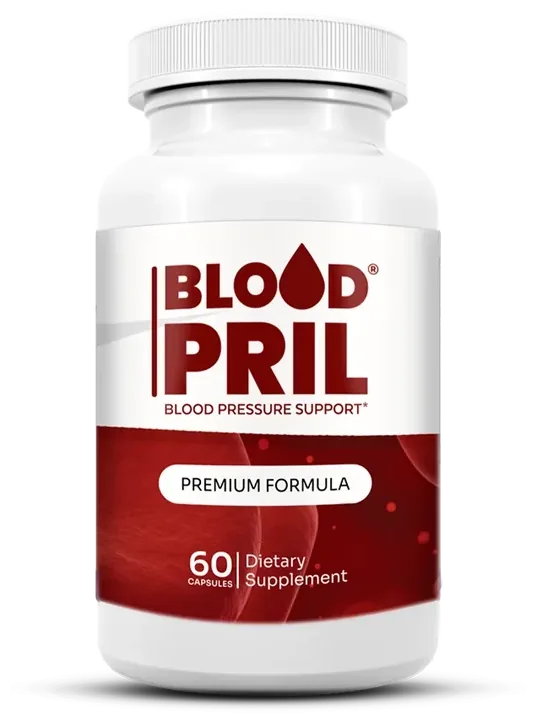
The suffix -pril marks the ACE inhibitors. The StatPearls chapter on the class puts it in one sentence: these medications most commonly end with the suffix -pril, and the examples it gives are lisinopril, ramipril and captopril. BloodPril is a dietary supplement sold for blood-pressure support, and it contains nothing of that kind: the panel declares a 500 mg proprietary blend of three amino acid salts, and no drug substance appears anywhere on it. This post alleges no intent, because nobody can read an intention off a label. It prints the fact, names the source and says what the product is. It also prints the two warnings that are not on the bottle, and the thing that matters most: nothing here is a reason to change a medicine a prescriber has given you.

Drug names are built to a system. A stem at the end of a generic name tells a prescriber, a pharmacist and often a patient which class a medicine belongs to, which is why so many drugs in one family rhyme.
For the angiotensin-converting enzyme inhibitors that stem is −pril. The StatPearls chapter on the class states it in one sentence: “These medications most commonly end with the suffix ‘-pril.’ Examples include lisinopril, ramipril, and captopril.” ACE inhibitors are prescription medicines, and one of the main things they are prescribed for is high blood pressure.
This product is a dietary supplement sold for blood-pressure support, and its name ends in those four letters. That is the whole observation, and it is not an accusation: a brand name is chosen by people whose reasoning nobody outside the room can read. What can be read is the label.
A drug class, and this product.
| ACE inhibitors | BloodPril | |
|---|---|---|
| What it is | A class of prescription medicines | A dietary supplement, 60 capsules |
| How the names end | −pril — lisinopril, ramipril, captopril | BLOOD PRIL |
| What is declared | An active pharmaceutical ingredient at a stated strength | Proprietary Blend 500 mg, three names, 0 of 3 weighed |
| What the contents are | Regulated drug substances | Three amino acid salts — no drug of any kind |
There is no ACE inhibitor in this product and this post does not suggest there is. The three names are amino acid salts, and the front says Dietary Supplement plainly.
BloodPril is a 60-capsule bottle, taken as one capsule daily with an 8 oz glass of water, up to two. The Supplement Facts panel is complete, and it declares one dietary line: a 500 mg proprietary blend of three ingredients, two of them the same amino acid in different salts. No individual amount is printed. What can be checked is the arithmetic: 60 capsules at one a day is 60 days a bottle, 30 at two.
60-day money-back window · from $0.82 a day · 60 days a bottle · ships from the USBecause of who is reading. A supplement sold for blood-pressure support is read by people who already have a diagnosis, and many of them have a box of tablets in a cupboard whose name ends in those same four letters.
Put the two side by side and the ordinary ways a person tells things apart work less well. A name that rhymes with a medicine, on a bottle bought for the thing that medicine was prescribed for, lands in a particular place. Nothing follows from that about anybody's intentions. What follows is about the reader.
The front panel itself is careful and should get the credit. It says Dietary Supplement, it carries one claim bar, Blood Pressure Support*, with an asterisk resolving to the full FDA disclaimer on the same wrap, and no disease is named anywhere on the bottle. So the gap is not between the name and the claims. It is between the name and the category — and a name travels further than a panel does, where no asterisk follows it.
The suffix is a fact. The source is a public one. The product is a dietary supplement containing nothing of that kind. We allege no intent, and a reader should not infer one from this page.

Here is the part of this subject that can actually hurt somebody, and it has nothing to do with the name. It is the overlap between the blend and the tablets in that cupboard.
Memorial Sloan Kettering Cancer Center's clinical summary for arginine records that with antihypertensives it “may have additive hypotensive effects”, and, for patients, that “arginine supplements can also lower blood pressure so taking both at the same time may not be safe.” It carries a second warning too: “in patients who had an acute myocardial infarction, arginine supplementation may increase risk of mortality.”
Neither sentence appears anywhere on this bottle. That is not a failure of completeness — the caution statement is complete. It is a gap in what is named: “individuals with a known medical condition should consult a physician” covers a reader with hypertension without telling them what the conversation is about. And the blend makes that conversation harder, because two of the three ingredients are arginine and neither carries a weight.
That the product is a drug. It is not, it does not claim to be, and the panel declares three amino acid salts and nothing else dietary. The front of the bottle says Dietary Supplement.
That the name was chosen to mislead. Nobody can read an intention off a label and this desk does not try. We print the suffix, the source and the category, and stop there.
That the label is a bad one. It is the best this desk has read: a real panel, a correct dagger footnote, a full other-ingredients list, a complete caution statement, storage, a safety-seal line, a qualified country-of-origin claim, a named distributor with a town, a postcode and a telephone number — Blood Pril, Lakeland FL, 33804, +1 (507) 448-8190 — and a properly asterisked FDA disclaimer.
And above all, that anybody should change anything they have been prescribed. Nothing on this page, on this site or on this bottle is a reason to alter a dose, skip a tablet or stop a course. If a supplement sold for the same purpose raises a question, raise it with your prescriber.
A supplement arriving in the post is not a reason to change a prescription. Keep the tablets and raise the bottle at the appointment rather than instead of it.
Photograph the panel. It is complete enough to be worth showing, and the fastest way for a prescriber to see what is and is not declared.
The words are additive hypotensive effects, because the bottle does not use them. If you have had a heart attack, mention the second warning too.
This is where the label comes off best. The front panel is correctly built: one claim, one asterisk, the full FDA disclaimer on the same wrap, no disease named, and Dietary Supplement printed plainly. This post is about four letters in a brand name.
It would be unfair to end a post about a brand name without saying what this product does better than most of the shelf.
It publishes a real Supplement Facts panel with a serving size and a servings count, which many listings in this aisle do not. It prints the † Daily Value Not Established footnote correctly, because no Daily Value exists for either amino acid, and a full other-ingredients list, so a vegetarian buyer can see the shell is hypromellose rather than gelatin.
It prints storage, a safety-seal line, a complete caution statement and the country-of-origin claim in its correctly qualified form — Made in the USA with globally sourced ingredients. This desk scores label completeness 4.5 and claim discipline 4.0 on this product, and both rows are earned.
Take the brand name and ask whether any part of it belongs to a drug class. Stems like −pril, −sartan and −statin are assigned deliberately, which is why a supplement wearing one is worth noticing.
Then check what the pack actually declares. A name is marketing; a Supplement Facts panel is a disclosure. Here the panel declares three amino acid salts inside a 500 mg blend and no drug substance of any kind, and that answer settles the question.
Then do the thing the name cannot do for you. If the product is sold for the same purpose as something you have been prescribed, ask the prescriber. A supplement is not a substitute for prescribed treatment, and nothing on this site is a reason to change one.

The desk reads the label at native resolution, recomputes every figure on it, and opens every source it cites. On this product that was unusually productive, because this label gives a reader more to work with than most. It earns a commission on orders placed through this site, which is why the dose arithmetic is at the top of the page rather than the bottom.
These slots are vacant on purpose. A physician's name was supplied with the product pack and we were asked to print it as the medical reviewer of these pages. He has not read them — they were written after the pack arrived. On a product sold for blood pressure, to readers who may be taking prescription medicine for it, a borrowed medical endorsement is the most dangerous thing a page like this could carry.
Sources are listed in full on every page that makes a claim · Our method and who writes this · Report a correction
Written and fact-checked by The Bloodprildaily Editorial Desk, last updated October 12, 2026. A highlighted slot means that value has not been supplied yet and nothing has been invented in its place — why the reviewer line is empty.