Find the panel first
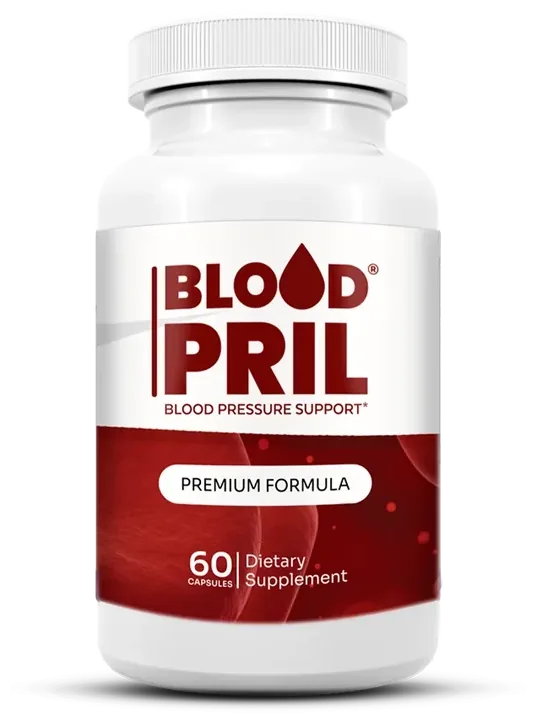
Before the front, before the badges, before the reviews. This product makes that easy: the panel is photographed and complete.
A blend is not a blank. It gives you a total and an order, it withholds every individual weight, and it leaves exactly enough arithmetic to compute a ceiling.
Written by the BloodPril editorial team·Last updated October 12, 2026·How this page was checked
A proprietary blend discloses two things and withholds one. Under 21 CFR 101.36 it must print the combined weight of the dietary ingredients and list them in descending order of predominance by weight. It does not have to print the individual amounts, and this panel does not. The worked example is on the bottle this site sells: a 500 mg blend over three named ingredients, so 0 of 3 carry a weight. Descending order still gives a ceiling for each position, so the first is at most the whole 500 mg, the second at most 250 mg and the third at most 167 mg. Two of the three names are the same amino acid in different salts, and all three are salts, so the free amino acid is less again.

Most of what this desk writes about a label is an absence. This is the rarer case: a panel that is complete and correctly built, and still unable to tell you the one thing you came for.
The panel above carries a serving size, a servings-per-container count, the correct † Daily Value Not Established footnote, a full other-ingredients list and an FDA disclaimer. It is the best panel this desk has read. And its dietary half is one row: Proprietary Blend 500 mg †, with three ingredient names underneath and no figure against any of them.
So the question is not whether a blend is allowed. It is what a blend hands over and what it keeps. It discloses a total and an order. It withholds every individual weight. Everything below is built from the two things it does give you.
21 CFR 101.36(c) in ordinary English, against this panel.
| Line | What it does for a reader | On this panel |
|---|---|---|
| Serving size | Makes every amount an amount per serving, and turns a container into a supply | 1 capsule |
| Servings per container | Gives a cost per day rather than a cost per bottle | 60 |
| The blend's combined weight | The one dietary figure a blend must print. Everything computable comes from it | 500 mg |
| Every ingredient, by name | Says what is in it, under recognised names | 3, named in full |
| Descending order of predominance | Turns the list into arithmetic: position n cannot exceed the total divided by n | Present, which is what makes ceilings possible |
| The individual amounts | What lets an ingredient be set beside the dose a study used | Not required, and not printed. 0 of 3 |
| Other ingredients | Everything present that is not a dietary ingredient | Hypromellose, microcrystalline cellulose, magnesium stearate |
Six of those seven rows are correct. The one that is not is the one a dose comparison needs.
BloodPril is a 60-capsule bottle, taken as one capsule daily with an 8 oz glass of water, up to two. The Supplement Facts panel is complete, and it declares one dietary line: a 500 mg proprietary blend of three ingredients, two of them the same amino acid in different salts. No individual amount is printed. What can be checked is the arithmetic: 60 capsules at one a day is 60 days a bottle, 30 at two.
60-day money-back window · from $0.82 a day · 60 days a bottle · ships from the USTurn the bottle round and count two things: how many dietary ingredients carry a weight, and how many do not. That fraction says more about a product's disclosure than any amount of front-panel copy.
Then read the blend total and the order, because together they are a set of upper bounds. Then read the names for two things most people skip: whether one substance appears twice under different chemistry, and whether the names are salts.
Run that here and it returns a clean set of answers. The fraction is 0 of 3. The total is 500 mg. The order gives ceilings of 500, 250 and 167 mg. One substance appears twice. All three names are salts. None of that needed a phone call or a laboratory.
Ingredients with a printed amount against ingredients without. Three and zero tells you a blend is in use. Seventeen and zero tells you everything is declared.
This is the part most readers walk past, and the part that does the work. A list in descending order of predominance by weight is not a style choice. It is a claim about relative size, and claims about relative size become limits.
Take a blend of total T in descending order. Nothing in position n can be heavier than anything above it, so n ingredients that heavy must fit inside T, and position n is therefore at most T divided by n. On a 500 mg blend of three that is 500 mg, 250 mg and 167 mg.
Every one is a ceiling rather than an amount, and every one is generous: the first could only be the whole 500 mg if the other two were zero, and they are not. The real figures are lower than all three, and nobody outside the company knows by how much. That is the honest description of a blend — not a blank and not a disclosure, but a bound.

Here is the worked example in full. The blend names L-Citrulline dl-Malate, L-Arginine (Alpha-Ketoglutarate dihydrate) and L-Arginine HCL. Three lines, one total, no weight against any of them.
Then notice that arginine appears twice. Positions two and three are the same amino acid as two different salts, so a three-ingredient blend is really two active substances. Nothing about that is unlawful, and the panel describes both forms accurately. It does change how the ceilings read: the two arginine lines together are capped at 250 plus 167 mg, competing for the same 500 mg as the citrulline above them.
Then notice that all three are salts rather than free amino acids. dl-Malate is part malic acid, alpha-ketoglutarate dihydrate is part ketoglutarate and water, and HCl is roughly seventeen parts hydrochloric acid in every hundred, so each line delivers less amino acid than its ceiling and no conversion is printed. And be exact about what that means: it does not mean the amounts are low. It means nobody outside the company knows how the 500 mg is split.
This desk holds no test result. Reference BP-4631-26-BL is a string of the right shape with no laboratory document behind it, and lot BP-26/BL-4631 is a production code rather than an assay. We are not saying the capsule is weak, only that the panel will not let anybody check.
Before the front, before the badges, before the reviews. This product makes that easy: the panel is photographed and complete.
Ingredients with a printed amount against ingredients without, then the blend total divided by each position. Here that is 0 of 3 and 500 / 250 / 167 mg.
Look for one substance appearing twice under different chemistry, and for salts rather than free compounds. Both are here, and both push the real figure below every ceiling.
Everything in this post is about what a panel discloses, not whether the disclosure is accurate. A perfectly compliant panel can carry a total nobody has tested. A panel is a floor rather than a verdict, which is why this one, the best this desk has read, still leaves the dose question open.
The Dietary Supplement Health and Education Act of 1994 created the modern category. Before it, the boundary between a food, a supplement and a drug was contested in a way that gave shoppers very little clarity.
The bargain was straightforward. Supplements would not need pre-market approval of their formulas or claims. In exchange they would have to disclose what they contained, in a standard format, on the pack.
The proprietary blend is the compromise written into the disclosure half of that bargain. A maker may withhold the individual weights provided the combined total and the order of predominance are printed. The order is the part that protects the reader, and almost nobody uses it.
It is worth being even-handed, because individual weights guarantee nothing either. They do not tell you whether the printed amounts are present; that requires testing, and no test result was supplied here.
They do not tell you how much free amino acid a salt delivers unless a conversion is printed, and on this panel none is. They do not tell you who manufactured the product, only who distributes it — and on this bottle that line is present, which is more than most.
So a full panel is necessary and not sufficient. A blend removes the necessary half and leaves a bound in its place. A bound is usable, but it is not the same thing as being told.

The desk reads the label at native resolution, recomputes every figure on it, and opens every source it cites. On this product that was unusually productive, because this label gives a reader more to work with than most. It earns a commission on orders placed through this site, which is why the dose arithmetic is at the top of the page rather than the bottom.
These slots are vacant on purpose. A physician's name was supplied with the product pack and we were asked to print it as the medical reviewer of these pages. He has not read them — they were written after the pack arrived. On a product sold for blood pressure, to readers who may be taking prescription medicine for it, a borrowed medical endorsement is the most dangerous thing a page like this could carry.
Sources are listed in full on every page that makes a claim · Our method and who writes this · Report a correction
Written and fact-checked by The Bloodprildaily Editorial Desk, last updated October 12, 2026. A highlighted slot means that value has not been supplied yet and nothing has been invented in its place — why the reviewer line is empty.