Which figure is in the bottle?
Not the figure in the study, and not the blend total. Here it is a ceiling: at most 500, 250 and 167 mg.
Both amino acids in this blend have real pooled human evidence, which is more than most supplement ingredients can say. The trials used grams. The blend is 0.5 g.
Written by the BloodPril editorial team·Last updated October 12, 2026·How this page was checked
Dose-matching needs four numbers: the amount in a serving, the amount used in the research, the units both are in, and the daily schedule. The L-citrulline meta-analysis covered 8 trials with 10 data sets at 3 to 9 g a day and found systolic pressure 4.10 mm Hg lower; its diastolic result of 2.08 mm Hg was not statistically significant overall and reached significance only at 6 g a day or more. The L-arginine meta-analysis covered 11 randomised, double-blind, placebo-controlled trials involving 387 participants at 4 to 24 g a day, reporting systolic 5.39 mm Hg lower and diastolic 2.66 mm Hg lower. This whole blend is 500 mg, which is 0.5 g, and 1 g at the permitted two capsules.

A unit change is where most dose comparisons quietly fail. A panel prints milligrams because milligrams look substantial. A trial paper reports grams because grams are what was given.
One gram is a thousand milligrams. That is the whole of the arithmetic. The dietary declaration on this bottle is 500 mg, which is 0.5 g. The lowest dose used in either pooled analysis behind these ingredients is 3 g a day.
Something worth saying first: both amino acids here have real pooled human evidence for blood pressure, published with confidence intervals and p-values, which a great many supplement ingredients cannot say. The problem is not an absence of research. It is the distance between the amount the research used and the amount in the bottle.
The first three rows are quoted from meta-analyses this desk read. The fourth is this label.
| What | Dose used | Result reported | Where this bottle lands |
|---|---|---|---|
| L-citrulline, 8 trials with 10 data sets | 3 to 9 g a day, over 1 to 17 weeks | Systolic −4.10 mm Hg (p=0.037) | First in the order, so at most 500 mg — a sixth of the lowest trial dose |
| The same analysis, diastolic | As above | −2.08 mm Hg (p=0.069) — not statistically significant; significant only at 6 g a day or more | That threshold is twelve times the whole blend |
| L-arginine, 11 randomised, double-blind, placebo-controlled trials, 387 participants | 4 to 24 g a day | Systolic −5.39 mm Hg, diastolic −2.66 mm Hg | Two of the three lines, capped at 250 mg and 167 mg |
| This blend | 500 mg a day at one capsule, 1 g at two | No trial exists on this blend | 0.5 g against a 3 g floor, shared between three lines |
Every ceiling in the right-hand column is the most that ingredient could be, and the real figures are lower, because all three are salts and two are the same amino acid.
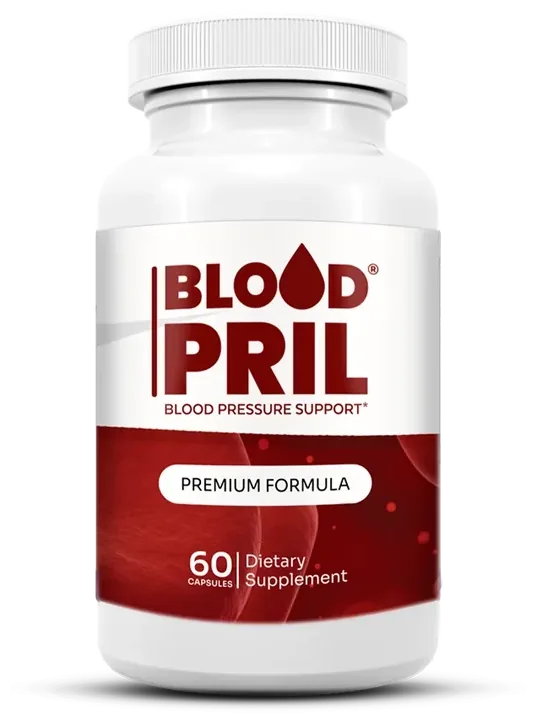
BloodPril is a 60-capsule bottle, taken as one capsule daily with an 8 oz glass of water, up to two. The Supplement Facts panel is complete, and it declares one dietary line: a 500 mg proprietary blend of three ingredients, two of them the same amino acid in different salts. No individual amount is printed. What can be checked is the arithmetic: 60 capsules at one a day is 60 days a bottle, 30 at two.
60-day money-back window · from $0.82 a day · 60 days a bottle · ships from the USFirst, the amount in a serving. On a complete panel this is printed. Here three ingredients share one blended total, so the honest substitutes are the ceilings the order permits: at most 500, 250 and 167 mg.
Second, the amount the research used, and third, the units. Not the figure a marketing page quotes but the figure in the paper: 3 to 9 g a day for citrulline, 4 to 24 g a day for arginine. Convert before comparing. 500 mg is 0.5 g, about a sixth of a 3 g floor even if the blend were nothing but citrulline.
Fourth, the schedule. Trial doses are daily doses. The label asks for one capsule daily with an 8 oz glass of water and permits up to two, so the daily blend is 0.5 g or 1 g. Two capsules also halves the bottle to 30 days and doubles the cost a day to $2.63, $1.97 and $1.63.
Usually at the second number, because no trial exists on the ingredient at all. Here both substances have pooled trials and it breaks at the first number instead, the one the blend withholds.

A dose gap is evidence about a comparison rather than a verdict on a product. It does not prove the capsule does nothing. No trial has been run on this blend at this amount, so nobody has measured what it does, including us.
What it establishes is narrower and firmer: the published results quoted beside these ingredient names were produced at doses between six and forty-eight times the whole blend, and they cannot be transferred to it. A reader who sees 4.10 mm Hg beside an ingredient is reading a figure that belongs to a different quantity.
It is also worth reading the citrulline analysis exactly as published, because its authors were careful. The systolic result reached significance. The diastolic result did not — −2.08 mm Hg, p=0.069 — and reached it only at 6 g a day or more. Quoting the systolic figure and dropping the diastolic one is the commonest way this paper is misused. The arginine record carries a counterweight too: the same summary notes that “long-term supplementation worsened PAD.”
This needs saying plainly on a page full of millimetres of mercury. Nothing above is a reason to change, reduce or stop a blood-pressure medicine, and nothing above says the capsule lowers anything. A pooled reduction in a trial population is not a prediction about one person.
The direction that matters more for safety runs the other way. The clinical summary for arginine records that with antihypertensives it “may have additive hypotensive effects”, and that “taking both at the same time may not be safe.” That sentence is not on this bottle. If you take a prescribed antihypertensive, the panel is something to show your prescriber rather than to act on.
The label's own caution statement gets you most of the way and deserves the credit: “individuals with a known medical condition should consult a physician.” What it does not do is name the interaction.
And one note on arithmetic rather than pharmacology. The permitted two capsules double the blend to 1 g. That still sits below the lowest dose in either analysis, and it halves the bottle to 30 days.
Not the figure in the study, and not the blend total. Here it is a ceiling: at most 500, 250 and 167 mg.
Convert first. 0.5 g against 3 to 9 g reads very differently from 500 mg beside a paper's name.
Read past the headline. Here the systolic result held and the diastolic one did not, except above 6 g a day.
Both amino acids in this blend have pooled human trials behind them, which is unusual and worth saying. Those trials ran at 3 to 9 g and 4 to 24 g a day. The whole blend is 500 mg. The published reductions belong to the trial doses, not to this one.
This post rests on two published papers and one label.
Two label faces. The printed wrap and the Supplement Facts panel, read at native resolution and transcribed in full: the serving size, the servings count, the blended 500 mg total, the three names, the dagger footnote, the other-ingredients list, the directions, the caution statement, storage and the FDA disclaimer.
Two meta-analyses, opened and read rather than summarised from an abstract, with their doses and p-values quoted as printed — including the diastolic result that did not reach significance.
No certificate of analysis. Reference BP-4631-26-BL arrived as a string with no laboratory document behind it, so nothing here rests on an assay.
That the ingredients are poorly chosen. They are not. Citrulline and arginine are the two amino acids with the most pooled human evidence behind them. The question here is quantity, not selection.
That the capsule does nothing. Nobody has measured it at this amount, so nobody can say that, including us. What can be said is that the published figures were produced at six to forty-eight times the whole blend.
That more would be better. That is not ours to suggest and the label caps itself at two capsules. The arginine summary carries two warnings of its own, so a dose question here is a prescriber's rather than a reader's.

The desk reads the label at native resolution, recomputes every figure on it, and opens every source it cites. On this product that was unusually productive, because this label gives a reader more to work with than most. It earns a commission on orders placed through this site, which is why the dose arithmetic is at the top of the page rather than the bottom.
These slots are vacant on purpose. A physician's name was supplied with the product pack and we were asked to print it as the medical reviewer of these pages. He has not read them — they were written after the pack arrived. On a product sold for blood pressure, to readers who may be taking prescription medicine for it, a borrowed medical endorsement is the most dangerous thing a page like this could carry.
Sources are listed in full on every page that makes a claim · Our method and who writes this · Report a correction
Written and fact-checked by The Bloodprildaily Editorial Desk, last updated October 12, 2026. A highlighted slot means that value has not been supplied yet and nothing has been invented in its place — why the reviewer line is empty.